Demystifying Compostability: From Global Standards to Invertebrate Toxicity Metrics
With the global rollout of “plastic bans” and increasingly stringent environmental regulations, compostable packaging has become a critical requirement for brands expanding into international markets. However, amid a market flooded with varying biodegradation test reports, many companies often find themselves trapped in hidden compliance risks such as “mismatched standards” and “unrecognized certifications.”
What kind of test reports truly carry international credibility? And what are the key differences between composting standards across regions (e.g., industrial composting vs. home composting)? As a specialist deeply engaged in sustainable packaging solutions, this article aims to provide a clear and structured overview to help ensure your products achieve full regulatory compliance in global markets.
1. Classification of Degradation Pathways
When referring to “biodegradable” materials, packaging designers and procurement professionals most often encounter confusion regarding the actual degradation environments. In reality, material degradation does not occur under all natural conditions; it is highly dependent on temperature, humidity, and microbial activity. Generally, degradation pathways can be categorized into the following three scenarios:
Industrial Composting
Standard test conditions: Temperature maintained at 58 ± 2°C, with relative humidity of 50–60%.
Time requirement: Complete biodegradation and disintegration must be achieved within 6 months.
This is currently the most technically mature and widely recognized certification category internationally. It requires materials to degrade efficiently under controlled conditions within industrial composting facilities equipped with specialized infrastructure and large-scale operational management systems.
Home Composting
Standard test conditions: Ambient temperature is typically 25 ± 2°C, simulating backyard or household composting environments, with relative humidity maintained at 50–60%.
Time requirement: Due to significantly lower temperatures compared to industrial composting, the degradation process is slower. Materials are generally required to achieve complete biodegradation within 12 months.
Home composting places a much higher sensitivity requirement on the material’s biodegradability performance. It has become an increasingly preferred direction for premium sustainable packaging solutions and is gaining strong traction in European and North American markets in recent years.
Marine Degradation
Current status analysis: At present, international standards and regulatory frameworks for marine biodegradation are still in the process of development and refinement. Strictly speaking, there is no globally unified and universally recognized certification system specifically for marine biodegradability.
Industry consensus: Although standards such as ASTM D6691 and ISO 19679 can be used to evaluate a material’s biodegradation behavior in seawater environments, the commercialization and large-scale application of “marine degradable” materials remain highly challenging. This is primarily due to the extreme variability of marine conditions worldwide, including temperature, salinity, and microbial composition.
2. How Can We Verify That a Film Material Is Truly Compostable?
Just as we rely on specific industry standards (such as ISO and ASTM) when measuring film thickness or tensile strength, verifying whether a material is genuinely “compostable” also requires strict, objective, and standardized testing data.
Different countries and regions have established their own compliance thresholds based on local environmental regulations and waste management systems. In this discussion, we will not focus on niche or region-specific regulations, but rather on the core international standards widely recognized in global trade—those trusted by leading brands and end consumers.
Only when a material successfully passes these rigorous standardized tests and carries the corresponding accredited certification mark on its packaging can it be considered to have obtained a “passport” to the global green market. This also helps companies effectively avoid legal and reputational risks associated with greenwashing.
A.Common Industrial Composting Certifications and Labels
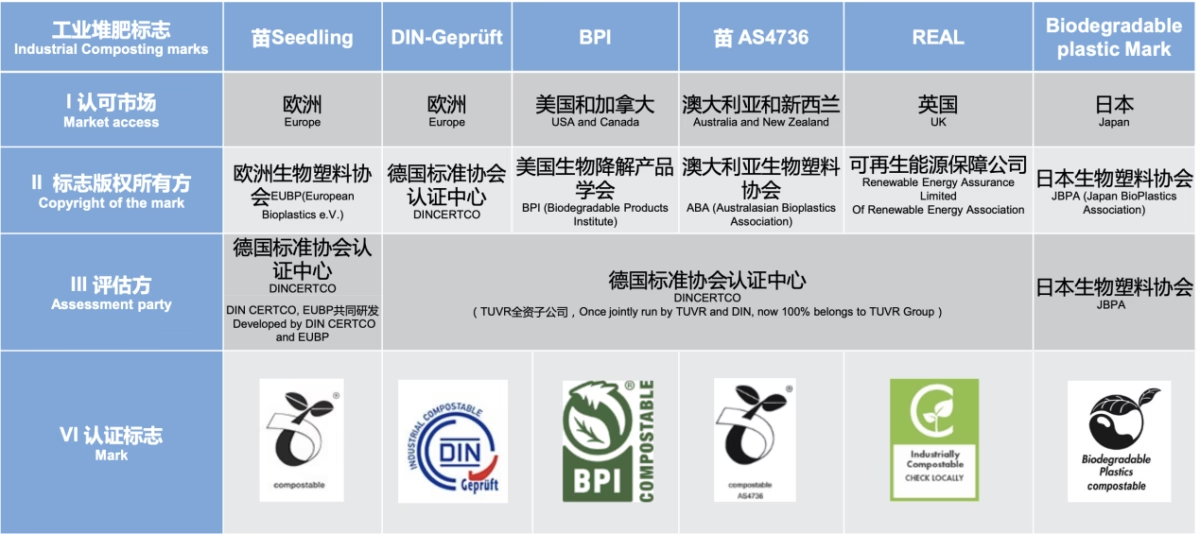
As illustrated, in today’s highly fragmented global market, end buyers and supply chain stakeholders most commonly recognize three major certification systems: Europe’s Seedling / DIN-Geprüft, the United States’ BPI, and Australia’s AS 4736.
In comparison, certifications such as the UK’s REAL or Japan’s JBPA are less frequently encountered in day-to-day cross-border trade activities. Therefore, for companies expanding into international markets, prioritizing these three core certification systems is typically sufficient to cover the vast majority of premium sustainable packaging supply chains worldwide.
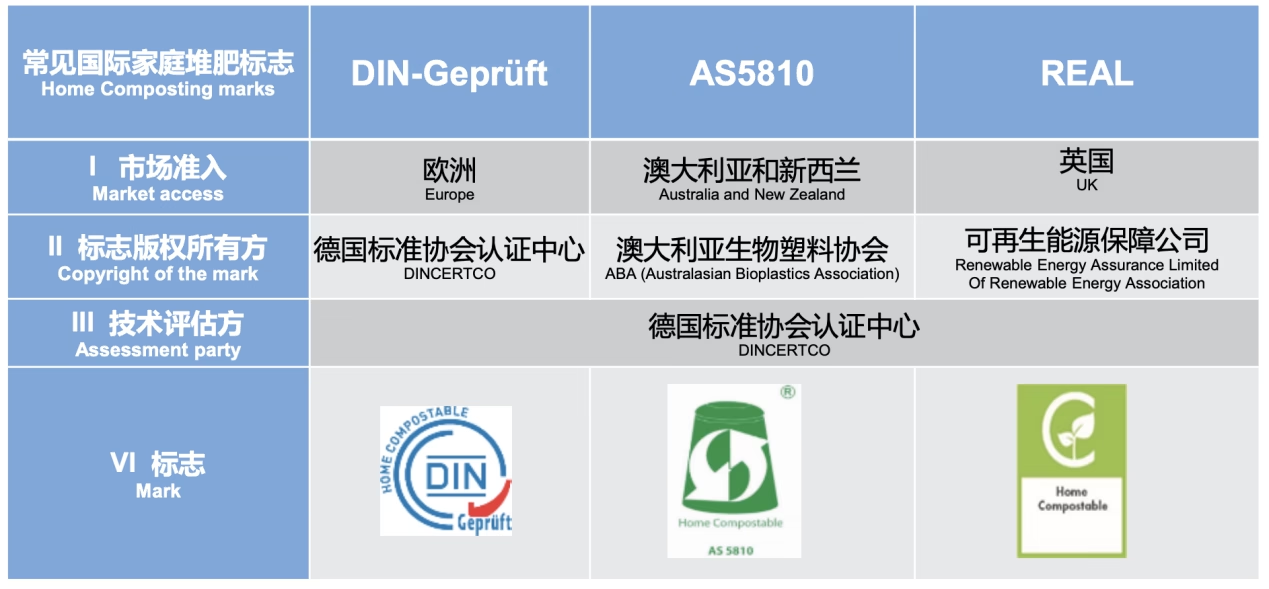
B.Common Home Composting Certifications and Labels
C.Key Compostability Certification Standards
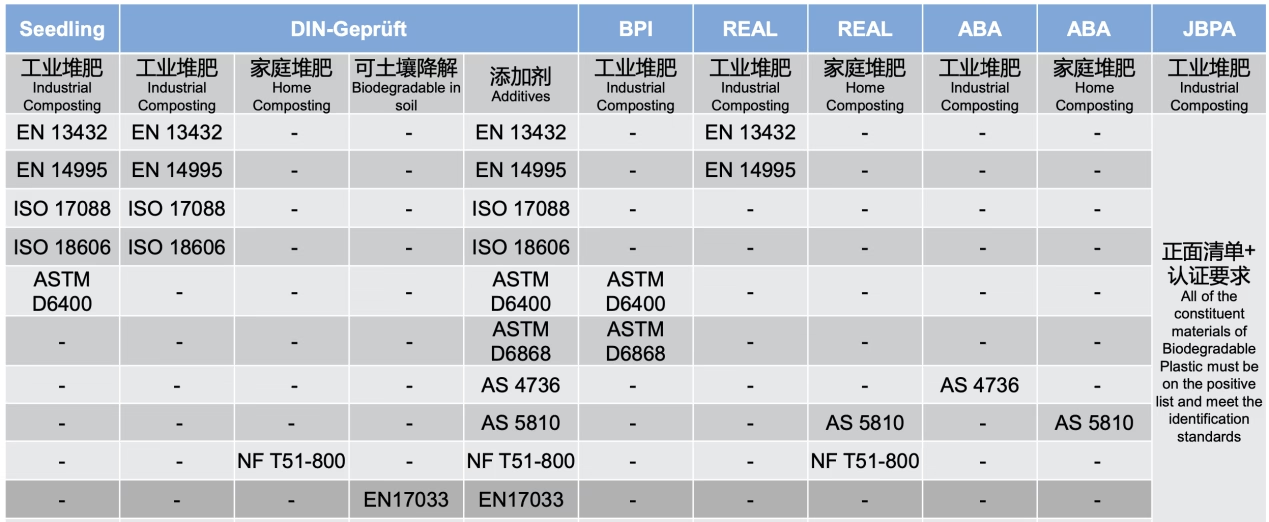
Faced with a highly complex and overlapping matrix of international standards, procurement and packaging development professionals actually only need to focus on two core “golden standard” dimensions:
1.Industrial Composting
Key standards to recognize include EN 13432 (Europe, widely regarded as the global benchmark standard) and ASTM D6400 (United States).
2.Home Composting
Key standards include NF T51-800 (France/Europe) and AS 5810 (Australia).
(Note: AS 4736 applies to industrial composting in Australia, while AS 5810 is for home composting.)
In cross-border trade, as long as your film roll stock or final packaging structure holds a valid compostability certification report aligned with any of these internationally recognized standards, it is generally sufficient to demonstrate strong compliance and verified “green” performance to global buyers, both technically and from a regulatory standpoint.
3.Laboratory Accreditation and Certification Bodies
Once the relevant testing standards are established, the next critical question is: which institutions should be engaged to ensure full compliance?
The core principle is as follows: accredited laboratories generate the test data, and internationally recognized certification bodies issue the official certification marks.
At present, the three most widely recognized certification bodies in global trade—defining what certification label your product is allowed to carry—are:
DIN CERTCO (German Institute for Standardization Certification Body — issuing the EU “Green Leaf/Seedling” compostability mark)
BPI (Biodegradable Products Institute, USA — issuing the North American compostability certification mark)
ABA (Australian Bioplastics Association — issuing the Australian compostability certification mark)
(Note: JBPA in Japan is less commonly applied in cross-border flexible packaging trade compared to the above mainstream certification systems.)
4.Assessment of Compostability of Biodegradable Materials (International Standards)
A. Biodegradation Capability:
At least 90% of the total organic carbon in the sample must be converted into carbon dioxide, or the degradation rate of the sample must not be lower than 90% of the reference material’s degradation rate. (Test duration: maximum 180 days for industrial composting, maximum 365 days for home composting.)

B. Disintegration: Physical “breaking down into pieces”
On a physical level, the material must be able to break down into pieces within the specified time. Standard requirement: At the end of the composting period, the sample is sieved through a 2 mm standard mesh. The dry weight of any film residues remaining on the sieve must not exceed 10% of the initial sample weight.
Industrial composting test duration: maximum 84 days
Home composting test duration: maximum 180 days
C. Safety Testing:
- Harmful Substances Test: The product must not exceed limits for harmful substances to prevent accumulation in soil and potential environmental hazards.
- Phytotoxicity Test: The composted sample must not adversely affect the germination and early growth of higher plant seeds. Requirement: The germination rate and biomass of the composted sample must be at least 90% of the corresponding control compost.

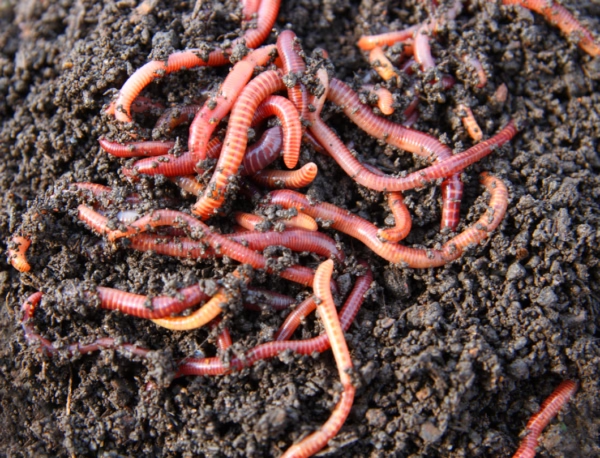
- Earthworm Toxicity Test: The composted soil from the degraded sample packaging must not cause any acute toxic effects on test earthworms. Standard requirement: Compared with the corresponding control group, the differences in earthworm mortality and average biomass (body weight) change in the sample compost group must not exceed 10%.
Let’s Connect & Partner for Sustainable Growth
Are you currently developing a sustainable packaging pipeline or evaluating functional film alternatives for your global supply chain? Ensuring regulatory compliance doesn’t have to be a bottleneck for your brand’s international expansion.
As an established manufacturer specializing in functional film roll stock, Keyful New Material provides certified, high-performance compostable and eco-friendly solutions tailored to your technical requirements.
Explore our full product range and request verified technical data sheets here: www.keyful.com
Have specific technical or barrier requirements? Welcome to email me at: Dylan@kfnmsz.com. Let’s build a greener future together!