From Plastic to Compostable:Practical Applications of Biodegradable Materials in Flexible Packaging
With the global push to ban plastics accelerating, the flexible packaging industry is undergoing a profound sustainability transformation. However, as brands and bag manufacturers transition from a mature plastic supply chain to relatively unfamiliar biodegradable materials, concerns naturally arise: Can the material structure provide a seamless, “drop-in” replacement? Are barrier properties up to standard? Can complex bag formats maintain stability during actual production?
At Keyful, we address these industry challenges with a data-driven approach. We conduct in-depth evaluations of the physical and mechanical properties of various biodegradable substrates and repeatedly fine-tune production on different bag-making equipment. In doing so, we strike a balance between “performance metrics” and “cost-effectiveness.” We don’t just provide biodegradable films—we are committed to offering a complete, practical solution from material selection to finished product implementation.
Three Core Concerns in Transitioning to Biodegradable Packaging
Q1: Will switching to biodegradable materials require replacing existing bag-making equipment?
A: No change is needed. Keyful’s core technological advantage lies in providing “seamless switch” material solutions. Our biodegradable films are designed from the outset to be fully compatible with conventional plastic processing equipment. You can start production on your existing lines, achieving a smooth transition from traditional plastics to eco-friendly materials.
Q2: Will machine parameters require repeated downtime and trial adjustments?
A: No blind trial-and-error is necessary. We understand how critical production efficiency is for bag manufacturers. That’s why Keyful provides a comprehensive technical support package with each shipment, including:
Technical Data Sheets (TDS): Covering key properties such as tensile strength and heat-seal strength.
Process Guidelines: Offering recommended printing tension, bag-making temperatures, and production speeds.
By leveraging our prior laboratory testing and extensive on-site production data, we eliminate the need for guesswork, ensuring your production lines achieve stable operation quickly.
Q3: How can traditional plastic structures be scientifically replaced with biodegradable structures?
A: Before planning a replacement, one key standard must be clarified—the difference between Industrial Compost and Home Compost.
Generally, materials that meet home compost standards are also compatible with industrial composting, but their application scenarios and degradation cycles differ. Based on this, Keyful provides two professional classification recommendations according to barrier requirements and sustainability levels:
Home Compostable: The “pinnacle” of sustainable packaging
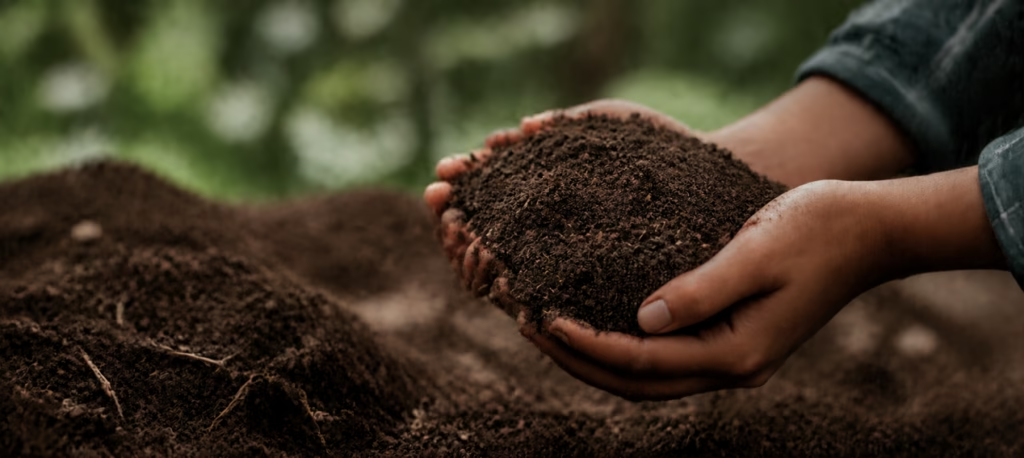
In the landscape of the circular economy, home compostable packaging represents the highest tier of sustainability in flexible packaging. It is not just a technical specification—it embodies a brand’s most genuine commitment to the environment: packaging that does not need to enter industrial composting facilities can complete its life cycle naturally in a home garden. Buried in soil, under normal ambient conditions, it returns to the earth.
Key Degradation Metrics:
Eco-compatibility: 100% biodegradable, ultimately converting entirely into carbon dioxide, water, and organic matter.
Mild Conditions: Effective degradation at natural ambient temperatures of just 25±5°C.
Optimal Moisture: Maintaining 50%–60% moisture triggers efficient breakdown.
Degradation Timeline: Guaranteed full return to nature within 12 months.
Keyful Home Compostable Material Matrix: Redefining Sustainable Packaging
Catering to the dual demands of freshness preservation and brand aesthetics in the premium coffee and pet food markets, we have carefully selected the following materials that combine high performance with high visual appeal:
1.Cellulose / Cellophane Films — The Green “All-rounder”
Derived from natural wood pulp, cellulose films are currently the best alternative to conventional plastics. To meet diverse market needs, we offer a range of functional options:
Basic Transparent Version: High-definition clear film with excellent transparency and superb printability.
High Barrier Series: Double-sided high-barrier film (WVTR < 18 / OTR < 3), specially designed for coffee to tightly lock in aroma, prevent oxidation, and extend flavor freshness.
Premium Visual Series (Matte):
Supreme Anti-scratch Matte: Solves the common issue of scratches on dark-colored packaging, ensuring perfect shelf presentation at all times.
Soft Touch Matte: Provides a velvety tactile experience, enhancing the brand’s “warmth” and customer interaction.
Non-fingerprint Touch: Maintains a clean, pristine appearance even with frequent handling, preserving a premium image.
Light-blocking Upgrade: Aluminum-coated cellulose film. Offers superior light-blocking performance and barrier protection (WVTR < 16 / OTR < 2), making it an ideal intermediate barrier layer in composite structures.
2.PBS (Polybutylene Succinate) — Strong and Milky White Base Material
Synthesized from butanediol and succinic acid, PBS serves as the “backbone” material in home compostable systems and is primarily used as a heat-sealable layer.
Characteristics:
Natural milky-white appearance
Customizable thickness
Advantages:
Excellent thermal stability and processability
Ideal choice for the inner layer of flexible packaging bags
3.PHA (Polyhydroxyalkanoates) — The Microbially-Synthesized Material of the Future
PHA is a natural polymer produced through microbial fermentation, representing the cutting edge of bioplastics, and is used as a heat-sealable layer.
Technical Breakthrough:
To address the challenges of PHA film formation, we have achieved stable film performance through scientific blending with PBAT.
Appearance:
Unique milky-white color
Supports a range of customizable thicknesses
Although all three materials mentioned above belong to the home-compostable degradation system, the application of PHA (polyhydroxyalkanoates) in flexible packaging is still at a “blue ocean” stage.
Due to the inherent physical properties of the material and the difficulty in film formation, most PHA available in the market today is still limited to rigid applications such as disposable straws or food service tableware.
Recommended Home-Compostable Packaging Structures for Different Product Categories
In the transition toward sustainable packaging, brands often face a “triangle balance” challenge among barrier performance, appearance, and cost.
Based on Keyful’s validated testing data, we recommend the following proven home-compostable laminate structures for premium coffee and light food applications:
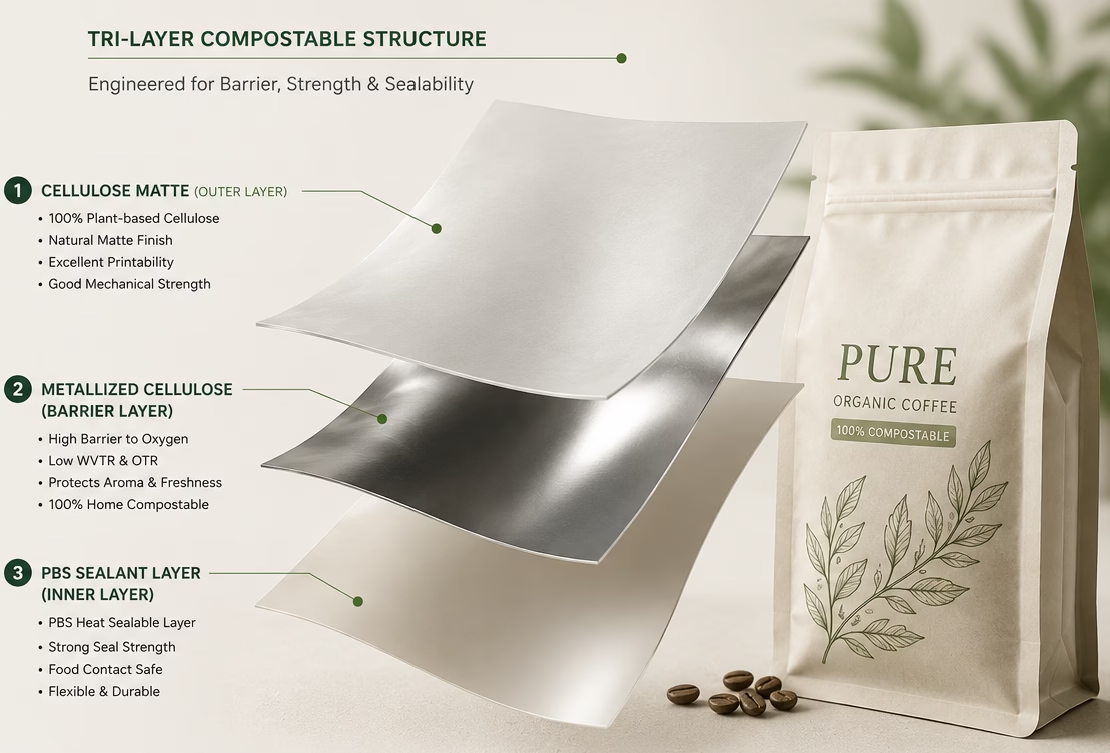
1.Minimalist: Lightweight Packaging Solution
Suitable for confectionery, tea, or short-turnover snack products.
Classic eco-friendly option: Cellulose clear film + PBS (high transparency, showcases the natural appearance of the product)
Natural texture option: Kraft paper + PBS (authentic, natural feel with strong eco-credibility)
2.Professional Upgrade: Standard Coffee / Pet Food Packaging Solution
Designed for products requiring high barrier properties (oxygen and moisture resistance) to preserve freshness.
Full-transparent high-barrier solution: Double-sided high-barrier cellulose glossy film + metallized cellulose film + PBS
Note: This structure provides excellent metallized light-blocking performance and helps extend shelf life.
3.Structural Enhancement: Perfect Balance of Rigidity and Dimension
Ideal for brands seeking improved shelf presence and a more upright, non-collapsing pouch structure.
Four-layer reinforced structure: Double-sided high-barrier cellulose glossy film + kraft paper + metallized cellulose film + PBS
Advantages: The addition of kraft paper enhances the tactile weight and natural paper feel, while significantly improving structural rigidity for better shelf display.
4.Ultimate Luxury: Keyful “Cloud Velvet Touch” Flagship Solution
Designed for premium coffee brands pursuing exceptional tactile experience and high brand value.
Anti-fingerprint luxury option: Cellulose anti-fingerprint soft-touch matte film + metallized cellulose film + PBS
Full premium flagship solution: Cellulose anti-fingerprint soft-touch matte film + kraft paper + metallized cellulose film + PBS
Industrial Composting: The Most Widely Adopted Sustainable Packaging Solution Worldwide
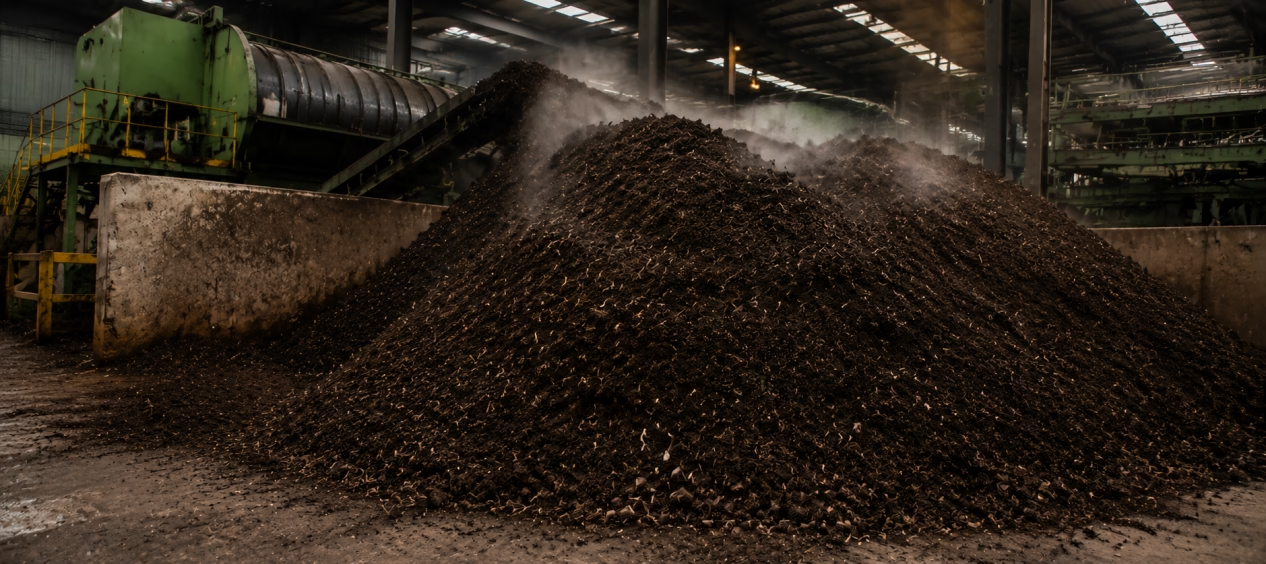
In the global landscape of sustainable packaging, industrial composting has become the most widely adopted green solution due to its excellent balance of performance and its highly efficient closed-loop end-of-life processing system. Compared with home composting, it achieves faster and more complete biological decomposition under controlled facility conditions.
Core Standards of Industrial Composting (Standard Metrics):
Controlled environment: Requires processing in specialized high-temperature facilities at 58±2°C.
Efficient degradation: The composting cycle is significantly shortened, typically completing within 6 months.
Ecological purity: Fully biodegrades into carbon dioxide and water, completely eliminating any microplastic residue.
Keyful Industrial Compostable Substrate Matrix
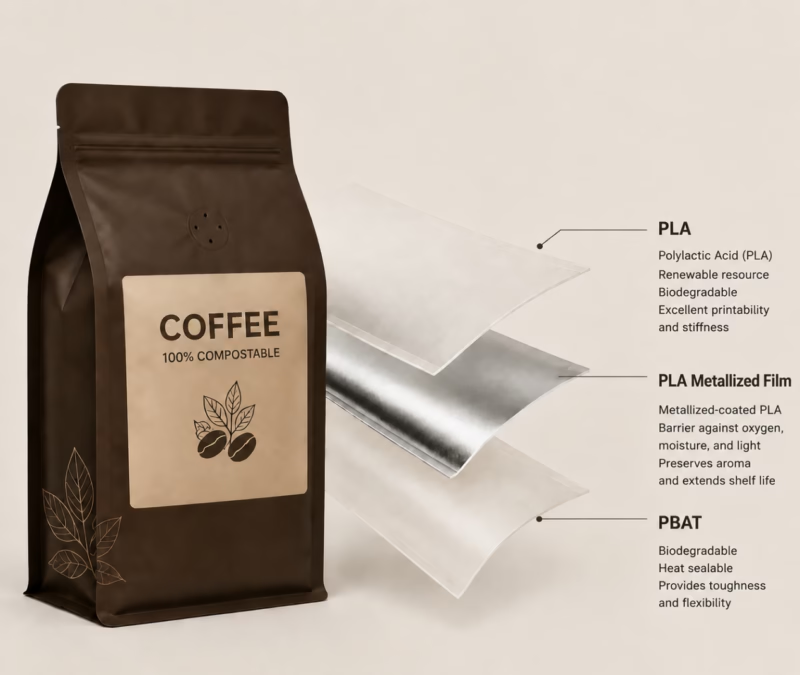
Through the scientific modification and composite application of PLA and PBAT, we provide brands with high-strength and high-barrier film solutions:
1.PLA (Polylactic Acid) — The “Structural Core” of Bio-Based Materials
Derived from renewable resources such as corn and sugarcane, PLA is currently the most commercially mature bioplastic. In multilayer structures, it primarily serves as the layer for printing and visual presentation:
PLA Gloss Film: Excellent transparency and surface smoothness, making it an ideal substrate for printing layers.
PLA Matte Film: Provides a premium, soft low-reflective visual finish, enhancing overall brand aesthetics.
PLA Metallized Film (intermediate layer): Offers reliable barrier performance (WVTR ≈ 4 / OTR ≈ 6), suitable for products requiring medium-level shelf-life protection.
2.PBAT — The “Guardian” of Flexibility and Toughness
This copolyester material combines the flexibility of conventional plastics with excellent elongation properties, ensuring the mechanical strength of flexible packaging.
Core application: Due to its outstanding heat-sealing strength, PBAT is typically used as the sealing layer (inner layer) in laminated structures.
Keyful proprietary product — PBAT metallized film: This is one of our key differentiated solutions. It not only offers excellent flexibility but also provides a balanced barrier performance (WVTR ≈ 100 / OTR ≈ 215). It can be flexibly used either as a heat-seal layer or as an intermediate barrier layer depending on application requirements.
Recommended Industrial Compostable Laminated Bag Structures
1.Full Cellulose High-Performance Solution (Home Compostable)
Structure: Cellulose film // Metallized cellulose film // PBAT (or PBS)
Positioning: Ultra-high barrier performance, ideal for premium coffee and high-end pet food applications.
2.Cellulose & PLA Hybrid Solution (High Cost-Performance)
Structure: Cellulose film // PLA metallized film // PBAT (or PBS)
Positioning: Balances outer surface tactile quality with cost efficiency of the core layer, suitable for mainstream snack packaging.
3.Flexible High-Barrier Solution
Structure: Cellulose film // PLA metallized film // PBAT
Positioning: Enhanced inner-layer flexibility, suitable for products with heavier weight or irregular shapes.
4.Basic Minimal Solution (Industrial Compostable)
Structure: PLA // PBAT
Positioning: Rapid transition to plastic-free packaging, suitable for short shelf-life foods or eco-friendly outer packaging.
5.Classic Industrial Compostable Solution
Structure: PLA // PLA metallized film // PBAT
Positioning: Standard industrial composting system widely used across FMCG applications.
6.Paper-Plastic Hybrid Single-Barrier Solution (Natural Aesthetic)
Structure: Kraft paper // PBAT metallized film
Positioning: Natural paper feel with internal light-blocking and moisture resistance, suitable for bread and dry baked goods.
7.Paper-Plastic Hybrid High-Barrier Solution
Structure: Kraft paper // Cellulose metallized film // PBAT metallized film
Positioning: Premium barrier performance for paper-based packaging, ideal for products requiring strong aroma and flavor protection.
Many times, the “one step away” transition from conventional plastics to compostable materials is constrained by trial-and-error costs and production efficiency. Over the past few years, Keyful has been working to help simplify and smooth this path.
We don’t just share materials—we also share practical “lessons learned” and troubleshooting insights gained directly from real production lines.
Sustainable transformation does not necessarily require starting from scratch. By selecting the right structure, high efficiency can still be achieved on existing production equipment.
If you are interested in the solutions and materials mentioned above, or have specific barrier performance requirements, please feel free to contact us. We would be glad to work with you to further optimize and refine the most suitable solution.