Production Process and Applications of Cellulose Anti-Scratch Matt Film
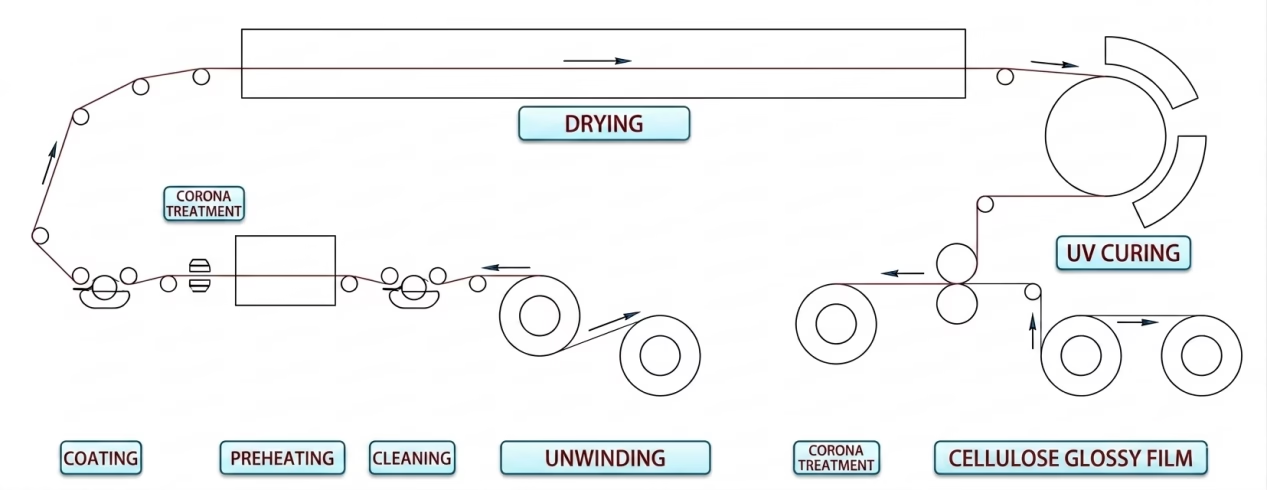
Following our previous introduction to cellulose glossy film, we will now continue to explain the production process and workflow of cellulose matt film. Cellulose matt film is produced based on cellulose gloss film through a coating process. One diagram to help you easily understand the coating process.
Cellulose gloss film → Unwinding → UV coating → Drying → UV curing → Rewinding
Cellulose Anti-Scratch Matt Film (English: Cellulose Anti-Scratch Matt Film) also features outstanding environmental properties. Its key advantage is that it is suitable for home composting. In natural soil environments, with the help of microorganisms, appropriate humidity, and moisture conditions, the material can gradually decompose into carbon dioxide and water. These by-products then re-enter the natural cycle, providing nutrients for plant growth and being absorbed through photosynthesis. The diagram below helps you easily understand its degradation process and key conditions.
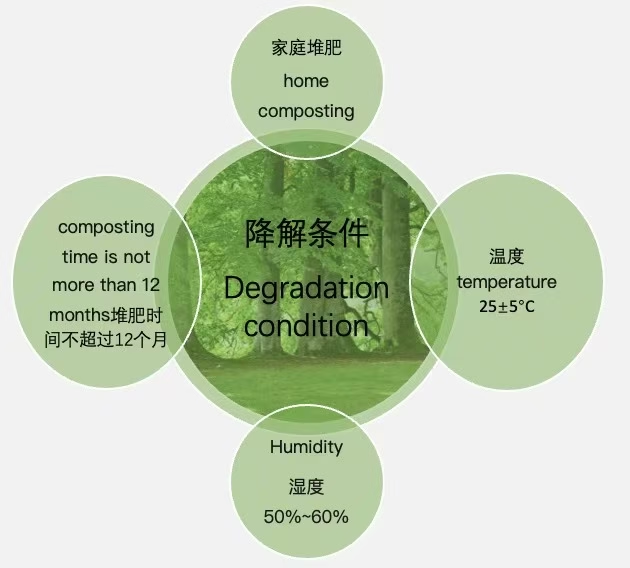
Cellulose Anti-Scratch Matt Film also features outstanding environmental properties. Its key advantage is that it is suitable for home composting. In natural soil environments, with the help of microorganisms, appropriate humidity, and moisture conditions, the material can gradually decompose into carbon dioxide and water. These by-products then re-enter the natural cycle, providing nutrients for plant growth and being absorbed through photosynthesis. The diagram below helps you easily understand its degradation process and key conditions.
Cellulose Anti-Scratch Matt Film, like cellulose gloss film, has broad application potential. However, due to its relatively high cost, it is currently mainly used by luxury brands as well as companies with strong social responsibility and environmental awareness. Next, we will take a look at the key industries where cellulose matte film is most widely applied.
1.Printed Packaging Lamination
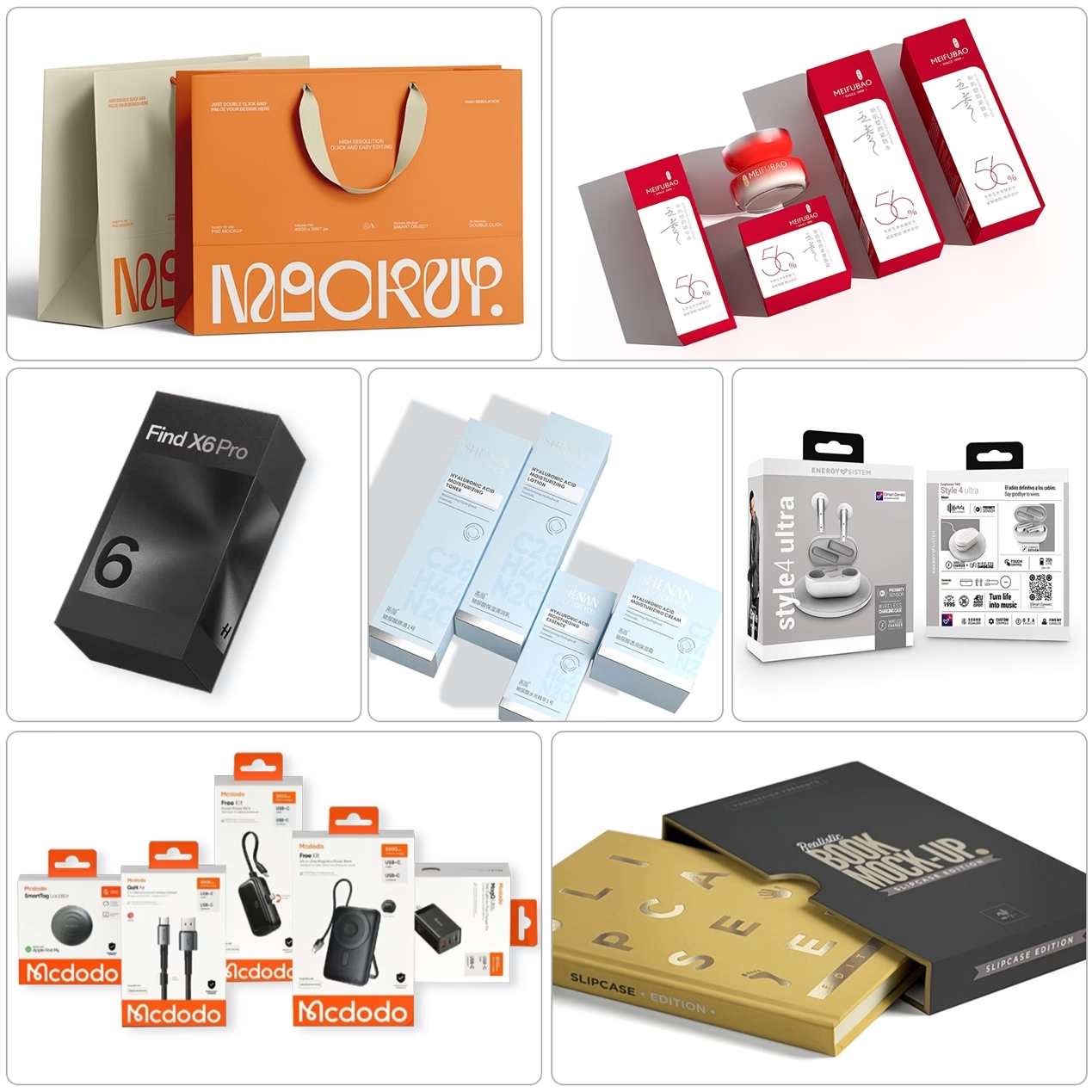
In the traditional folding carton industry, printed art paper or kraft paper is usually laminated with a matt and anti-scratch film (such as 18µm BOPP/BOPET) to effectively protect the printed surface and provide the packaging with functions such as water resistance, oil resistance, and anti-fouling. In addition, to reduce friction and scratching during transportation and assembly—especially in automated production lines—anti-scratch functional films are typically preferred.
However, this type of laminated paper requires the separation of plastic film from paper during the recycling process, which significantly increases recycling difficulty and cost. With the gradual implementation of plastic restriction policies in various countries, there is an urgent market demand for an environmentally friendly solution that can both maintain the original protective performance and be more easily recycled.
In this context, Cellulose Anti-Scratch Matt Film demonstrates its inherent advantages:
- Excellent recyclability: Made from paper-based raw materials, it can be recycled and repulped together with paper after lamination, significantly improving overall recycling efficiency.
- Superior processing performance: With natural surface energy (dyne level), it is suitable for various post-processing techniques such as hot stamping, silk screen printing, and UV coating, while also offering good fold resistance and burst resistance.
- Outstanding matte appearance: Its matte level is comparable to conventional BOPP anti-scratch matte film, with multiple gloss levels available. For example, Louis Vuitton uses approximately 9° gloss for its gold wine box, achieving excellent color reproduction while delivering a refined and premium matte finish.
As a result, Cellulose Anti-Scratch Matt Film is gradually becoming one of the most representative sustainable alternatives to traditional plastic films in the paper-plastic lamination industry.
2.Flexible Packaging Lamination
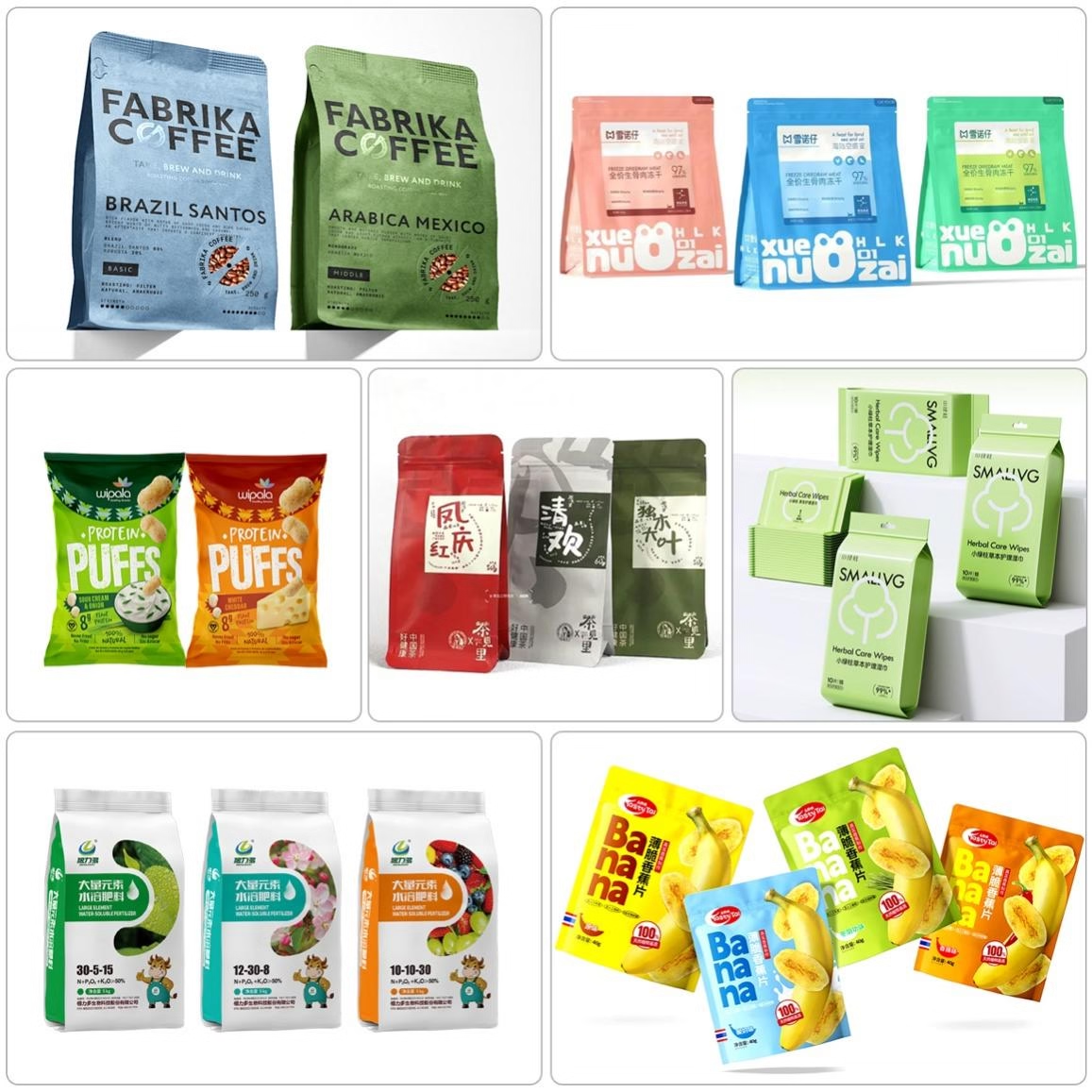
In the traditional flexible packaging industry, matte printing inks are commonly used to enhance the premium appearance of packaging, or BOPP matte films are applied for printing and finishing. After printing, these structures are often further laminated with other plastic materials such as PET metallized films or PE to meet barrier and functional requirements. However, such multi-layer composite structures are generally non-biodegradable, creating environmental pressure.
Against this backdrop, Cellulose Anti-Scratch Matt Film is gradually emerging as an ideal sustainable alternative in flexible packaging, with the following key advantages:
- High natural surface energy (dyne level): Ensures excellent printability and compatibility with various surface treatments
- Excellent flatness: Provides stable printing performance and good web tension control
- Premium matte appearance: Enhances visual luxury while maintaining excellent color reproduction
- Outstanding abrasion resistance: Prevents scratching during bag-making and handling, delivering superior tactile and visual quality
- Biodegradability: Derived from natural materials, it is suitable for home composting and offers strong environmental benefits
With these properties, Cellulose Anti-Scratch Matt Film is steadily becoming an important green alternative in flexible packaging applications.
However, its relatively high cost remains a key limitation. At present, it is mainly adopted by high-end products and brands with strong sustainability commitments, and its large-scale application in flexible packaging is still somewhat restricted.
3. Die-Cut Protective Film Applications
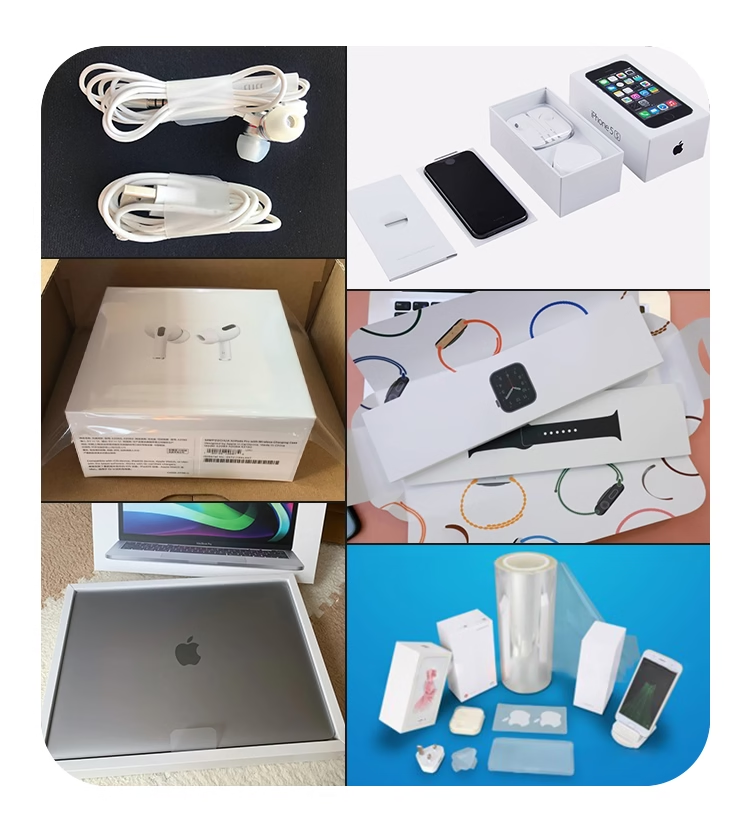
In daily life, you may notice that newly purchased products such as mobile phones, watches, or camera lenses are often covered with a matte protective film. These films are precisely die-cut according to the product’s shape, forming a highly fitted structure. Once removed, the product surface appears brand new, and their core function is to provide surface protection during transportation and display.
In industrial applications, conventional protective films are typically based on BOPP anti-scratch films. However, with the gradual implementation of plastic restriction policies worldwide, Cellulose Anti-Scratch Matt Film is emerging as a more sustainable alternative.
Its key advantages include:
- Full replacement of BOPP anti-scratch matte film: Plastic-free material enables biodegradability and helps eliminate plastic pollution
- Excellent processing performance: Suitable for complex die-cutting processes, allowing high-precision customization based on product shapes
- Natural biodegradability: Can naturally decompose in soil environments and return to the ecological cycle after use
- Effective surface protection: Protects product surfaces from scratches during transportation and handling
The application of Cellulose Anti-Scratch Matt Film elevates protective films beyond merely protecting products, extending their value to environmental protection as well, and driving the die-cut protective film industry toward a more sustainable future.
The above application areas represent the most established and widely adopted uses of Cellulose Anti-Scratch Matt Film at present. However, its application potential is not limited to these fields. It also shows promising use in areas such as matte labels and garment bags. For other more niche or highly specialized applications, they are not covered in detail here in order to maintain clarity and accessibility of the content.