The executive mandate for sustainability is clear. But achieving a truly ‘zero-waste’ supply chain is a mirage if your focus stops at the retail carton. Real impact demands we confront the hidden plastics woven into manufacturing, cleanrooms, and the arteries of global logistics. As a veteran Chief Sustainability Officer and polymer scientist with decades in industrial packaging, I’ve seen the industry chase shiny objects. This isn’t about incremental fixes. It’s about fundamental material science applied pragmatically to your entire value stream. We’ll discuss how advanced Polylactic Acid (PLA) film solutions from KEYFUL Group offer a tangible path beyond the superficial, addressing the core material flows that define your operational footprint.
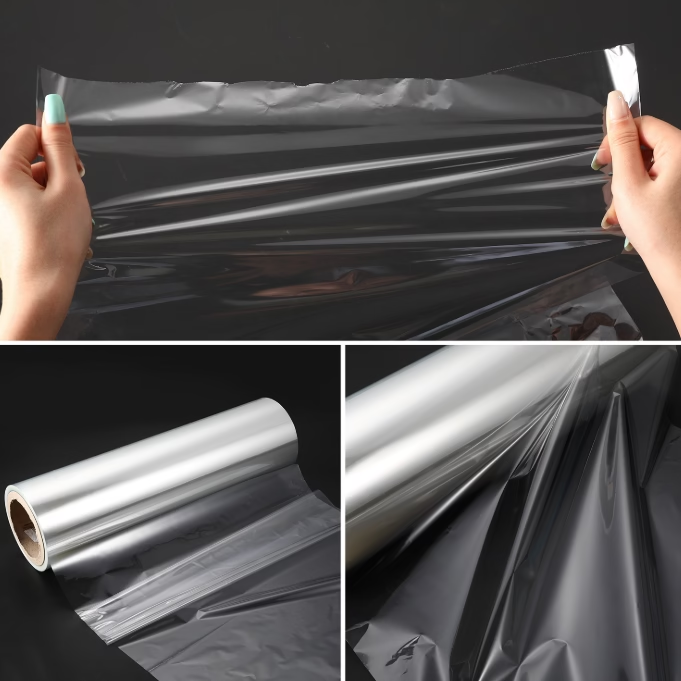
What’s Really Lurking in Your Industrial Supply Chain?
Most sustainability initiatives target the consumer-facing element. The shrink wrap on a pallet, the film protecting sensitive components, the laminate on premium printed materials – these are often overlooked. They represent significant material volumes, frequently petroleum-derived, and destined for landfills or incinerators. Ignoring these streams means your ‘green’ efforts are, at best, incomplete. At worst, they’re performative, failing to address the root of material waste in your industrial processes. We need to talk about yield rates, polymer degradation, and the total lifecycle cost, not just the upfront price of a ‘bio-based’ sticker.
Key Takeaways
- True supply chain sustainability transcends retail packaging, requiring a deep dive into industrial material flows.
- Advanced PLA-folies offer functional parity and often superiority to traditional plastics in demanding industrial applications.
- Consolidating bio-material sourcing with a specialist manufacturer like KEYFUL drives efficiency and verifiable environmental claims.
Can Advanced PLA Films Meet Rigorous Industrial Demands?
The answer is a decisive yes. The polymer science behind modern PLA has advanced dramatically. It’s no longer the brittle, low-heat-resistant material of its early iterations. Today’s Polylactic Acid films are engineered for specific, high-performance industrial uses. They offer functionalities that directly compete with, and often surpass, conventional petroleum-based films like BOPP, PET, and LLDPE. The key lies in understanding their precise application and the advanced manufacturing capabilities of a direct bio-materials manufacturer.
Premium Retail & Print Applications
For high-end packaging and print finishing, aesthetics and performance are non-negotiable. Traditional BOPP films are common for laminating due to their gloss and print receptivity. KEYFUL’s BOPLA (Biaxially Oriented Polylactic Acid) glossy and matt films are formulated to match these critical parameters. They provide exceptional ink adhesion, allowing for vibrant graphics and sharp text. Crucially, they offer a certified compostable end-of-life pathway, moving beyond the ‘recyclable’ promise that often fails in practice. This provides a genuine circular economy solution for brand owners demanding verifiable sustainability credentials.
Electronics & Cleanroom Environments
The electronics sector presents unique challenges: extreme sensitivity to static discharge, stringent cleanliness standards, and the need for precise release properties. Standard packaging films can introduce particulate contamination or leave adhesive residues. KEYFUL’s PLA silicone films are engineered specifically for these environments. They feature ultra-low release forces, calibrated precisely to the gram per inch, ensuring delicate components are protected. Furthermore, they are formulated to eliminate static charge build-up and prevent any silicone transfer, safeguarding sensitive optical grades and printed circuit board (PCB) assemblies. This is not generic film; it’s material science tailored for zero-risk component handling.
Logistics & FMCG Protection
Consider the vast quantities of stretch and shrink films used in industrial logistics and Fast-Moving Consumer Goods (FMCG) supply chains. These films secure pallet loads, protect products during transit, and prevent damage. Traditional LLDPE films offer high tensile strength and elongation. KEYFUL’s modified PLA stretch and shrink films are engineered to meet these demands. They achieve extreme elongation, stretching up to 200% without snapping. This ensures robust load-holding tension, maintaining stability across long-haul shipping routes, whether domestic or international. They provide the necessary mechanical performance while offering a compostable alternative to fossil-fuel-based plastics.
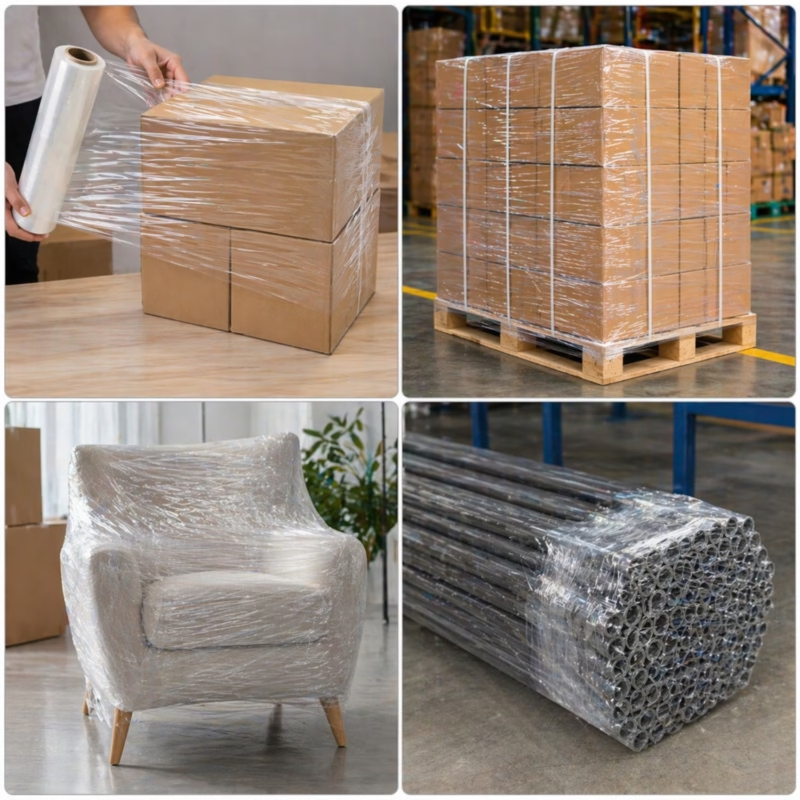
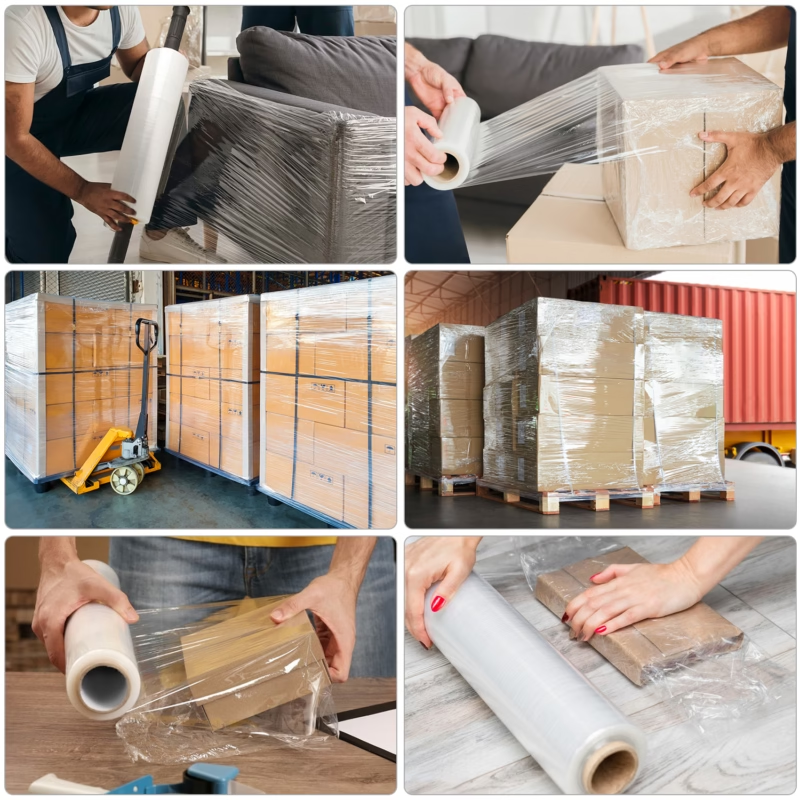
Mapping KEYFUL’s PLA Solutions to Your Industrial Needs
Strategic sourcing means aligning material capabilities with specific operational requirements. Fragmented vendor lists create inefficiencies, quality inconsistencies, and auditing overhead. KEYFUL Group offers a consolidated portfolio of advanced PLA films designed for direct industrial integration. This table outlines key solutions and their immediate applications:
| KEYFUL PLA Film Type | Industrial Application Focus | Key Performance Attributes |
|---|---|---|
| BOPLA Glossy/Matt Films | Premium Retail & Print (Compostable laminating) | Excellent ink adhesion, superior gloss/matt finish, certified compostable. |
| PLA Silicone Films | Electronics & Cleanrooms (Ultra-light release, anti-static) | Calibrated 3-5 g/in release force, zero static residue, cleanroom certified. |
| PLA Stretch/Shrink Films | Logistics & FMCG (Pallet wrapping, high tensile strength) | Up to 200% elongation, high load-holding capacity, impact resistant. |
Strategic Sourcing: Consolidate and Elevate Your Bio-Material Procurement
CPOs, listen up. Managing a dozen different ‘green’ vendors for niche films is a procurement nightmare. It fragments your supply base, complicates quality control, and multiplies your auditing costs. KEYFUL Group offers a different model. We are a direct bio-materials manufacturer, providing a unified source for certified, high-performance PLA films across multiple industrial applications. Consolidating your sourcing with us means fewer vendor relationships to manage, consistent material quality backed by rigorous testing, and reliable global supply chains. Our dedicated R&D team works with you on custom micron thicknesses and specific performance requirements. This isn’t just about buying film; it’s about strategic material partnership.
Evidence-Based Performance: Why PLA Outperforms Expectations
Skepticism around bio-materials is warranted, given years of ‘greenwashing’. But the data on advanced PLA is compelling. For instance, the mechanical properties of modern PLA films, particularly in stretch applications, are designed to meet or exceed traditional plastics. The Plastics Industry Association provides data on the challenges of recycling mixed plastics, highlighting why true circularity, as offered by industrial composting of PLA, is a more effective long-term strategy than the limited scope of mechanical recycling for many materials.
FAQ on Industrial PLA Film Solutions
Q1: Does consolidating our sustainable film sourcing actually save money?
Yes. Managing multiple niche suppliers eats your procurement budget in auditing and logistics. Using KEYFUL as your end-to-end biodegradable film manufacturer offsets the bio-resin premium through massive administrative scale.
Q2: Can BOPLA films truly replace traditional BOPP in high-speed laminating?
Absolutely. Our BOPLA matches the dyne levels of BOPP for flawless ink adhesion and runs smoothly on existing high-speed lamination machines without melting or jamming.
Q3: Are PLA silicone release films safe for sensitive electronics?
Yes. They are engineered for cleanrooms. We calibrate the release force down to 3-5 grams per inch with zero silicone transfer, protecting optical grades and PCB components.
Q4: Will a PLA stretch film snap during heavy pallet wrapping?
No. Our logistics PLA films are modified for extreme elongation. They stretch up to 200% and maintain load-holding tension across international shipping routes just like traditional LLDPE.
Q5: Why not just use recycled PET (rPET) instead of PLA?
rPET just delays the landfill. Every time you recycle PET, the polymer chains degrade. PLA closes the loop completely by returning to nature via industrial composting.
Q6: Can KEYFUL customize the thickness of these compostable films?
Yes. Our R&D team formulates custom extrusions ranging from ultra-thin 15-micron lamination layers up to 100+ micron heavy-duty protective films.
Q7: How do we verify KEYFUL’s compostability claims?
We do not guess. All our industrial PLA applications carry global certifications (like EN 13432 or ASTM D6400). We provide the lab data, not just marketing brochures.
Stop patching your supply chain with half-measures. Schedule a full sustainability audit with KEYFUL’s engineering team today.