Your premium product deserves packaging that shouts quality, not screams damage. But standard matte lamination, once a hallmark of sophisticated branding, is failing luxury cosmetics and high-end electronics. We’re talking about the insidious enemy: micro-abrasions. These tiny scratches, born from the brutal friction of corrugated shipping, instantly tarnish that expensive unboxing moment. They transform coveted goods into retail rejects. This guide introduces the BOPLA anti-scratch matt film, a material solution designed to protect your brand equity and your logistics budget. You will learn how this advanced film delivers a superior tactile experience and uncompromising compostability, finally aligning your packaging with both luxury expectations and ESG mandates.
Key Takeaways
- Standard matte films are highly susceptible to transit-induced micro-abrasions, leading to product rejection.
- KEYFUL PLA-SAS-M offers superior scuff resistance with a premium, soft-touch matte finish.
- This compostable film provides a guilt-free luxury packaging solution, meeting stringent environmental standards.
Why Does Transit Destroy That Premium Matte Finish?
The problem is fundamental. Standard matte films possess a microscopic surface topography. Think fine grit. This texture, while providing a desirable glare-free appearance, acts like sandpaper when rubbing against the rough fibers of corrugated cardboard during shipping. Every bump, every shift, every handling event inflicts damage. The result? A beautiful box arrives looking like it survived a wrestling match. This is unacceptable for products commanding premium prices. A $1,000 smartphone or a $200 perfume shouldn’t bear the scars of its journey before it even reaches the customer’s hands.
Introducing the Solution: KEYFUL PLA-SAS-M Film
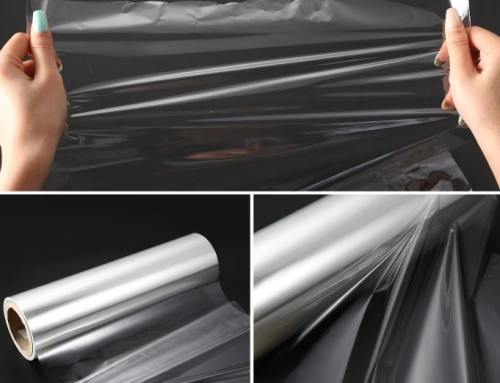
We engineered KEYFUL PLA-SAS-M to combat this pervasive issue. It’s a specialized BOPLA (Biaxially Oriented Polylactic Acid) film. Its defining characteristic is a proprietary hardened top-layer. This layer actively repels abrasive forces. It’s not just a coating; it’s a material science upgrade. The film maintains an exceptionally low gloss level, below 5%. This ensures your brand’s deep, rich color reproduction remains intact, free from distracting reflections. Consumers will feel the difference – that soft, velvety haptic feedback is critical for perceived value.
The Haptic Experience: Beyond Visuals
Luxury is felt. The texture of packaging is as vital as its appearance. Consumers associate a smooth, matte surface with high quality. It suggests careful craftsmanship and premium materials. Standard matte films deliver this initially. But their fragility undermines the entire sensory experience. A scratched surface feels cheap. It signals a lack of attention to detail from the brand. KEYFUL PLA-SAS-M preserves that crucial tactile sensation. It provides a consistently luxurious feel, carton after carton, shipment after shipment. This material integrity builds trust and reinforces brand perception.
Material Resilience Meets Environmental Responsibility
For too long, brands faced an impossible choice: premium aesthetics or sustainability. The market demanded both. Consumers increasingly scrutinize a brand’s environmental impact. They want products that align with their values. But they won’t compromise on the luxury experience. KEYFUL PLA-SAS-M bridges this gap. As a polylactic acid-based film, it is fully compostable. It meets the rigorous standards for biological degradation. This means your packaging can break down completely into natural elements, leaving no harmful microplastics. It’s guilt-free luxury, finally a reality.
Ensuring Compostability: A Deeper Look
The term ‘compostable’ can be vague. KEYFUL’s commitment is to verifiable science. Our PLA-SAS-M film is biologically verified for industrial composting conditions. The polylactic acid base decomposes into water, carbon dioxide, and biomass. This aligns with global standards for biodegradable materials, such as those outlined by the ASTM D6400 standard for compostable plastics. Crucially, the advanced anti-scratch layer is engineered for synchronous degradation. It breaks down at the same rate as the PLA base. This prevents any component from lingering, ensuring your packaging truly returns to nature.
Operational Integration: Simplicity for Printers
Implementing new materials can present logistical nightmares. We designed PLA-SAS-M for ease of adoption. It requires no new capital investment in machinery. Your trusted print partners can run this film on their existing thermal lamination equipment. The process is straightforward. A minor adjustment to the laminator’s temperature settings, typically just a few degrees higher than standard BOPP, is all that’s needed. This drop-in capability minimizes disruption and ensures a smooth transition for your packaging supply chain. Efficiency without compromise.
Compatibility with Finishing Techniques
Premium packaging often involves intricate finishing. Brands rely on techniques like foil stamping, spot UV, and embossing to create visual and tactile depth. You need assurance that your chosen film won’t interfere. PLA-SAS-M’s surface is precisely engineered. Its dyne level is calibrated to ensure excellent adhesion for these processes. Hot stamping foils adhere securely. Spot UV varnishes cure properly. Blind embossing creates crisp, defined impressions. The film’s integrity is maintained, preventing flaking or peeling. Your creative vision remains uncompromised.
Quantifying the Return on Investment (ROI)
The cost of premium film is a consideration. But the cost of damaged packaging is far greater. Consider the expense of a single product return due to scratched luxury packaging. The logistics of return shipping, inspection, potential disposal, and customer service intervention are substantial. Preventing just one instance of a damaged $2,000 laptop box can financially justify the marginal premium of PLA-SAS-M across thousands of units. You don’t just save money on returns; you safeguard your brand’s reputation and its commitment to sustainability. This is not an expense; it’s an investment in brand integrity and operational efficiency.
Stop letting fragile films dictate your brand’s perceived value and incur unnecessary costs. Your luxury products deserve packaging that protects their pristine condition and reflects a commitment to the future. Upgrade your premium boxes with the superior protection and sustainable credentials of KEYFUL PLA-SAS-M. Contact KEYFUL Group today to discuss your specific requirements and secure your brand’s premium unboxing experience.
FAQ
Does consolidating our sustainable film sourcing actually save money?
Yes. Managing multiple niche suppliers eats your procurement budget in auditing and logistics. Using KEYFUL as your end-to-end biodegradable film manufacturer offsets the bio-resin premium through massive administrative scale.
Can BOPLA films truly replace traditional BOPP in high-speed laminating?
Absolutely. Our BOPLA matches the dyne levels of BOPP for flawless ink adhesion and runs smoothly on existing high-speed lamination machines without melting or jamming.
Are PLA silicone release films safe for sensitive electronics?
Yes. They are engineered for cleanrooms. We calibrate the release force down to 3-5 grams per inch with zero silicone transfer, protecting optical grades and PCB components.
Why not just use recycled PET (rPET) instead of PLA?
rPET just delays the landfill. Every time you recycle PET, the polymer chains degrade. PLA closes the loop completely by returning to nature via industrial composting.
Can KEYFUL customize the thickness of these compostable films?
Yes. Our R&D team formulates custom extrusions ranging from ultra-thin 15-micron lamination layers up to 100+ micron heavy-duty protective films.
How do we verify KEYFUL’s compostability claims?
We do not guess. All our industrial PLA applications carry global certifications (like EN 13432 or ASTM D6400). We provide the lab data, not just marketing brochures.