

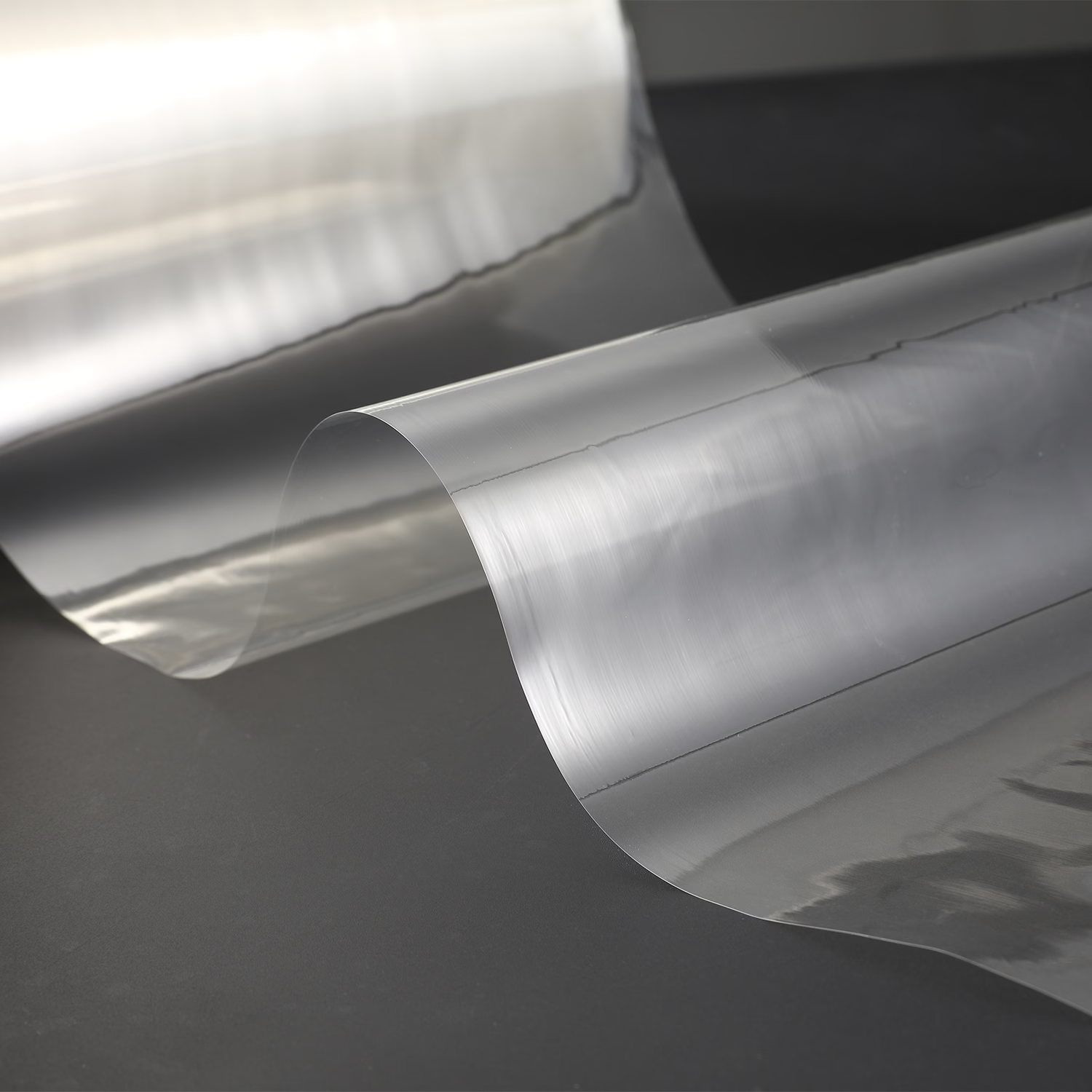
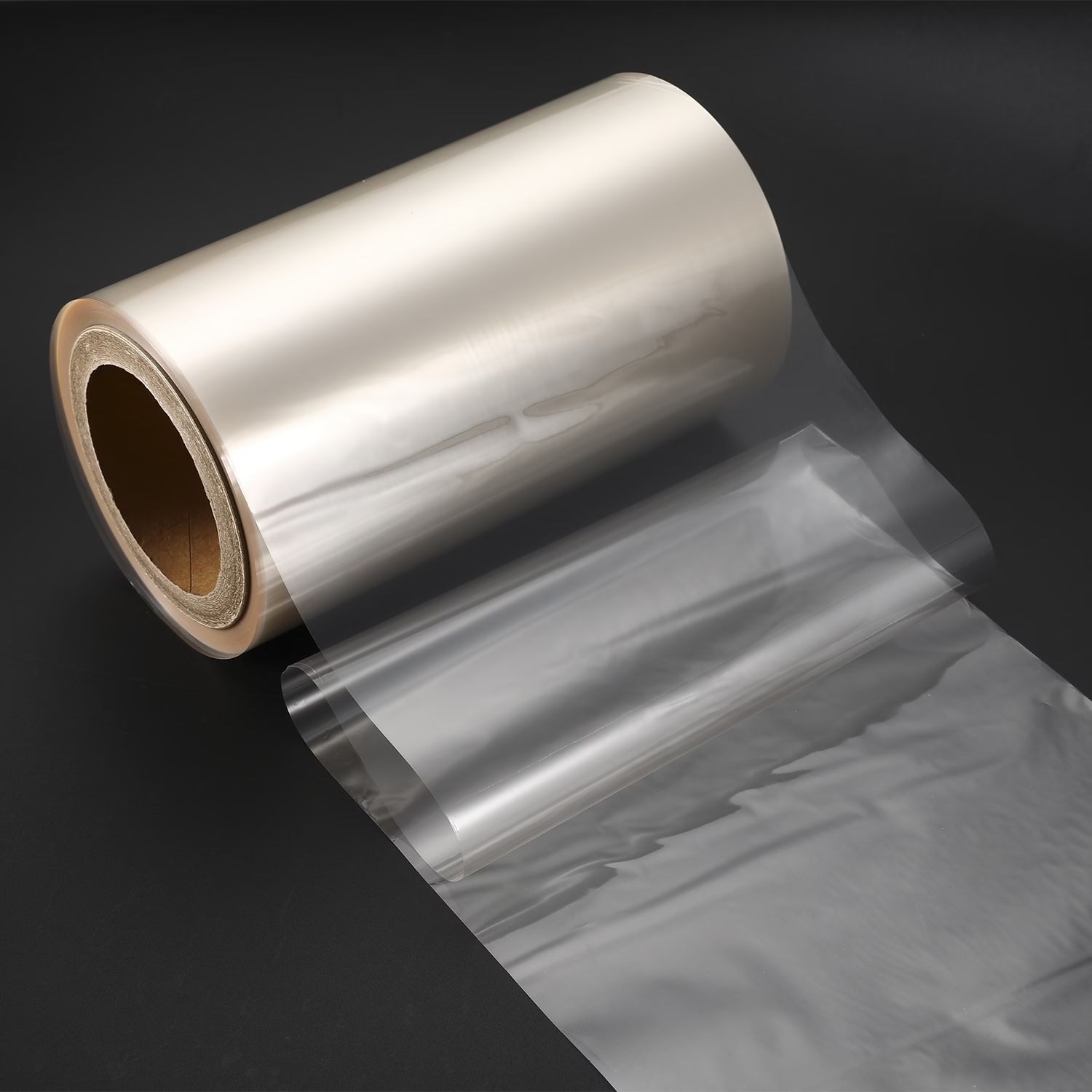
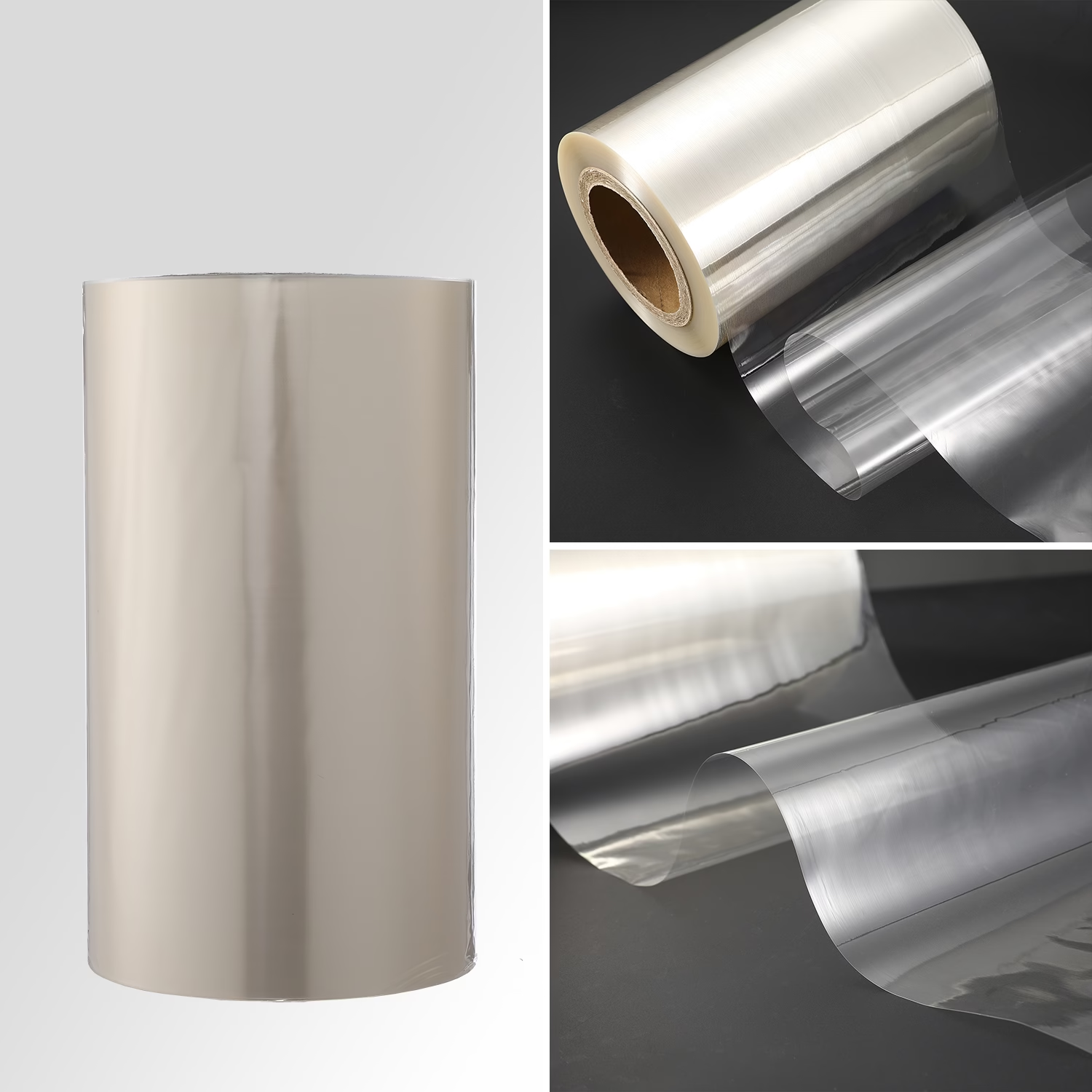
Película de celulosa de doble sellado-Keyful CP-DS
-Abastecimiento ecológico: Derivado de pulpa de madera renovable. Certificado para compostaje industrial y doméstico.
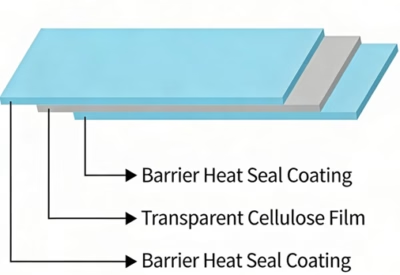
-Al añadir una pequeña cantidad de PVDC para optimizar las propiedades de barrera contra la humedad y los gases, permite estructuras de envasado más sencillas y ligeras, ayudando a prolongar y mantener la vida útil de los productos envasados.Ofrece una gran resistencia, excelente tenacidad, gran transparencia y fuerte resistencia al desgarro.
-Posibilidad de termosellado por las dos caras.
-Resistente a la absorción de humedad.
El valor fundamental de Keyful CP-DS reside en su excepcional rendimiento sostenible a lo largo de todo su ciclo de vida y en su calidad industrial. Este material alcanza un grosor de 27 ± 2 μm combinado con una resistencia al calor de 139 °C. Esta película no solo resuelve los puntos débiles habituales de los materiales biodegradables, como que son “frágiles y difíciles de sellar”, sino que también ofrece a los clientes mayoristas/distribuidores un equilibrio entre estructuras de envasado sencillas y una larga vida útil. En el contexto mundial de “desplastificación”, no sólo es una opción que cumple la normativa legal, sino también una solución de primera calidad para mejorar la competitividad ecológica de una marca.
Nos centramos en la investigación y el desarrollo, la producción, la fabricación y el suministro de diversos films de envasado flexibles, ecológicos y biodegradables, que abarcan BOPP, BOPET, BOPA, PE y films monomateriales reciclables, y nos comprometemos a satisfacer las diversas necesidades de soluciones de envasado del mercado.
La película de doble sellado de celulosa de la serie CP-DS de Keyful utiliza pulpa de madera renovable como materia prima, equilibrando perfectamente el rendimiento medioambiental con la practicidad industrial. Como película de celulosa de doble sellado, compostable y de alto rendimiento, incorpora un revestimiento de PVDC de proporciones precisas durante la producción. Este revestimiento no sólo optimiza significativamente las propiedades de barrera al agua y al oxígeno, sino que también consigue una reducción del uso de material al simplificar la estructura del envase. Su gran transparencia y su excelente resistencia al desgarro proporcionan a los productos una presentación visual y una protección física excepcionales, lo que la convierte en una opción ideal para la transición de la industria moderna de envases flexibles a la celulosa de doble sellado ecológica.
Como fabricante de film de celulosa termosellable por las dos caras, entendemos los requisitos de eficacia del envasado industrial automatizado. Este producto presenta propiedades de termosellado por las dos caras, lo que amplía significativamente la gama de procesos de fabricación de bolsas y envoltorios aplicables. Su excelente resistencia a la humedad garantiza la estabilidad física en entornos de almacenamiento complejos y, combinada con un rango de resistencia al calor de $139\pm2$°C, puede adaptarse a diversas líneas de producción de llenado automático de alta velocidad. Hemos establecido un nuevo punto de referencia para los proveedores mundiales de film de celulosa biodegradable termosellable, con el compromiso de ofrecer a los propietarios de marcas soluciones personalizadas que cumplan la normativa medioambiental y mejoren la calidad de la vida útil.
Aplicaciones
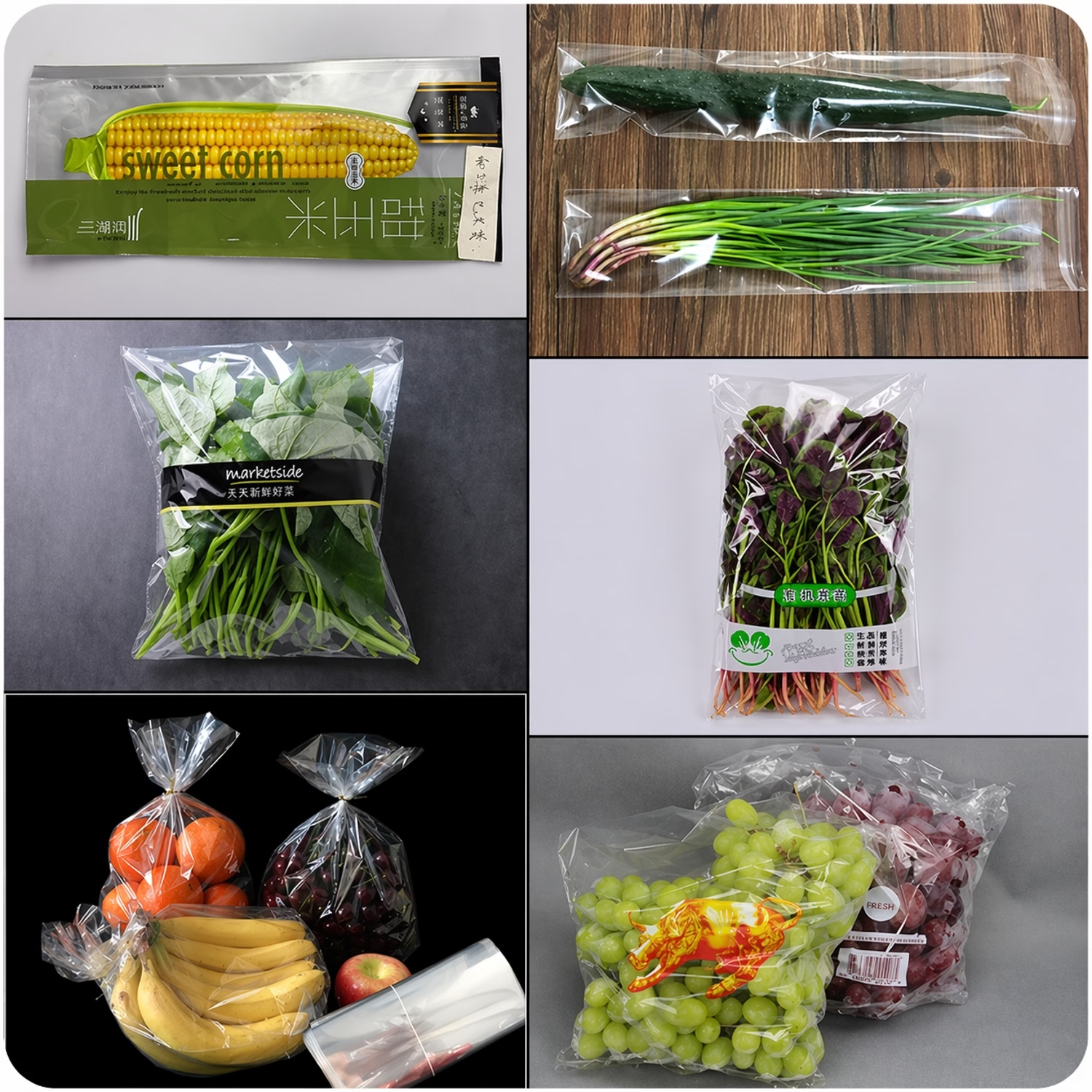
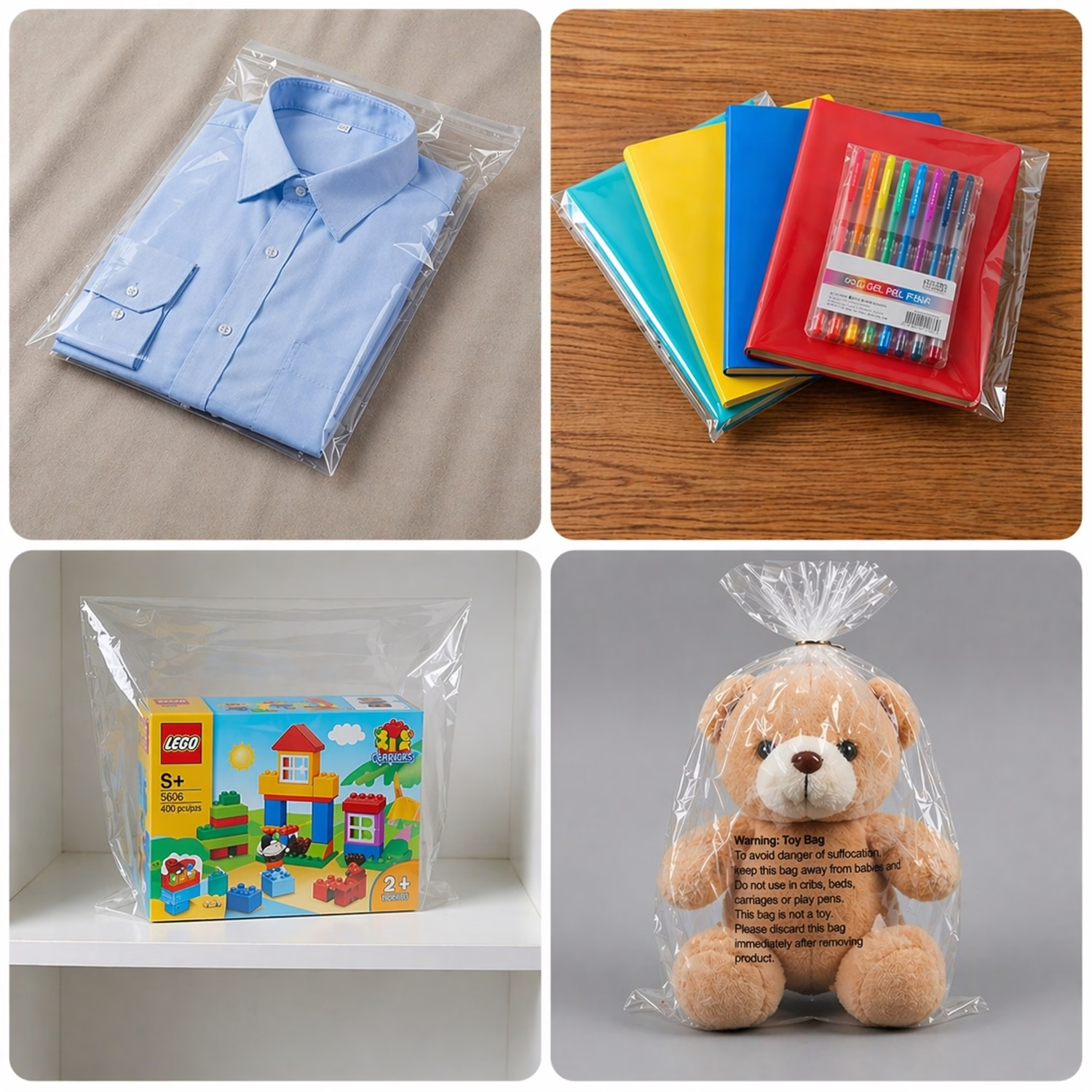
- Industria del embalaje flexible: Comúnmente utilizado para bolsas de una sola capa para ropa, verduras, componentes, juguetes y otras aplicaciones de envasado de una sola capa.
Propiedades técnicas (valores típicos)
| Propiedad | Unidad | Resultado | Método de ensayo |
|---|---|---|---|
| Espesor | micras | 23±2 | DIN 53 370 |
| Espesor | micras | 23±2 | ASTM D 2673 |
| Peso unitario | g/m | 35±2 | ASTM D-2673 |
| Rendimiento | m²/kg | 28.6±2 | ASTM D-2673 |
| Resistencia a la tracción MD/TD | MN/m² | 56 28 |
ASTM D 882 |
| Alargamiento a la rotura MD/TD | % | 18 41 |
ASTM D 882 |
| Módulo de elasticidad MD/TD | MN/m² | > 1200 > 600 |
ASTM D 882 |
| Resistencia de la junta | g(f)/25mm | 1.77 | 135°C; 0,5seg; 69kN/m² |
| Gama de juntas | °C | 120-160 | 0,5seg; 69kN/m². |
| Coeficiente de fricción (película a película) | / | 0.49 0.45 |
ASTM D 1894 |
| Permeabilidad al oxígeno | cc/m²-d | 1.6 | ASTM-D3985 23°C / 0% H.R. |
| Permeabilidad al vapor de agua | g/m²-d | 20 | ASTM F1249 38°C 90% H.R. |
Todas las propiedades se prueban en condiciones estándar de laboratorio: 23±2ºC; 50±5% HR, salvo que se indique lo contrario. Cuando procede, las pruebas se basan en normas internacionales. La metalización corre a cargo de un subcontratista. MD - Dirección de la máquina TD - Dirección transversal.