The “Deep Waters” of Coffee Capsules: How Material Innovation Can Solve the Challenge of Lid Film Degradation
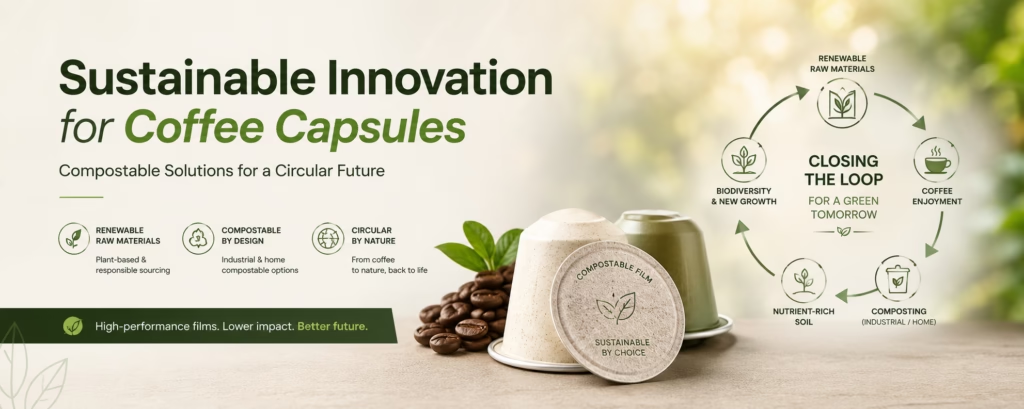
The coffee capsule was originally created to “lock in” the golden moment of Italian espresso flavor. By sealing ground coffee inside an individual capsule, it solved key pain points such as rapid oxidation and the high skill barrier of brewing, bringing what was once the privilege of specialty cafés into everyday households.
However, this extreme level of convenience came at the cost of widespread use of polymer-based composite materials at the time. Back then, the focus was on maximizing freshness and taste performance. Today, as coffee capsules have entered a global “deep-water” phase of mass adoption, the challenge has evolved. It is no longer just about how to preserve aroma and flavor, but how to maintain that same sensory quality while giving packaging the ability to “return to nature.”
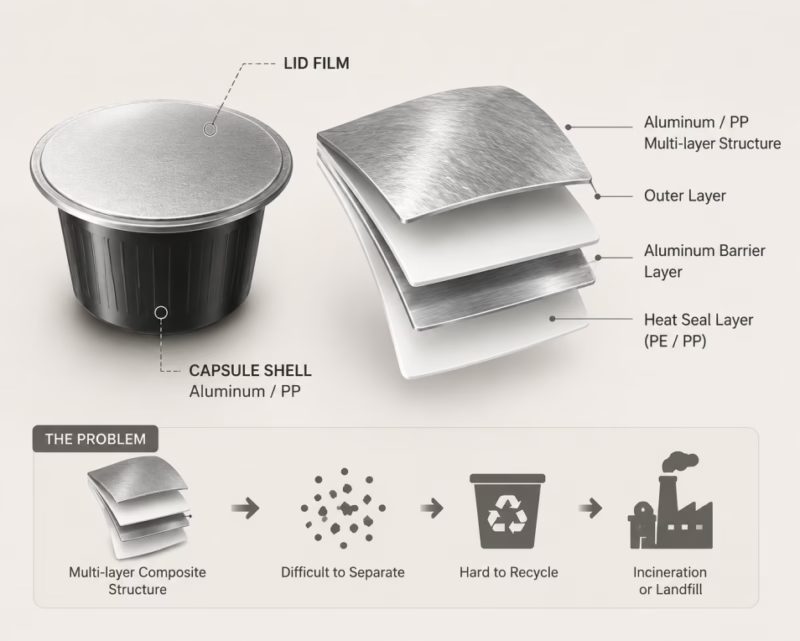
Currently, mainstream coffee capsule bodies are typically made from food-grade 8011 aluminum alloy or high-barrier PP materials. Within established recycling systems, these relatively mono-material structures already possess comparatively high recycling value.
However, the real “environmental bottleneck” is often overlooked—the capsule sealing lid film.
To ensure the required performance during espresso extraction, including high pressure resistance, heat resistance, and excellent oxygen barrier properties, lid films are usually designed as complex multilayer composites such as “Aluminum/PE” or “PP/Aluminum” structures. While these structures guarantee the ultimate coffee flavor experience, their “composite” nature makes physical separation extremely difficult. As a result, within existing recycling infrastructures, they are hardly sortable or recoverable, and ultimately end up being incinerated or landfilled as waste.
Why has such a small lid film become an “ESG dilemma” for coffee capsule brands? Because it breaks the very last mile of packaging circularity. Today, we take a closer look at how material innovation can enable this lid film to become truly biodegradable, empowering the full circular lifecycle of coffee capsules.
With tightening regulations on circular economy practices, brands are now facing a strategic shift from a “recycling model” to a “composting model.” In the field of coffee capsule packaging, we outline two key technical pathways for our partners based on different application needs:
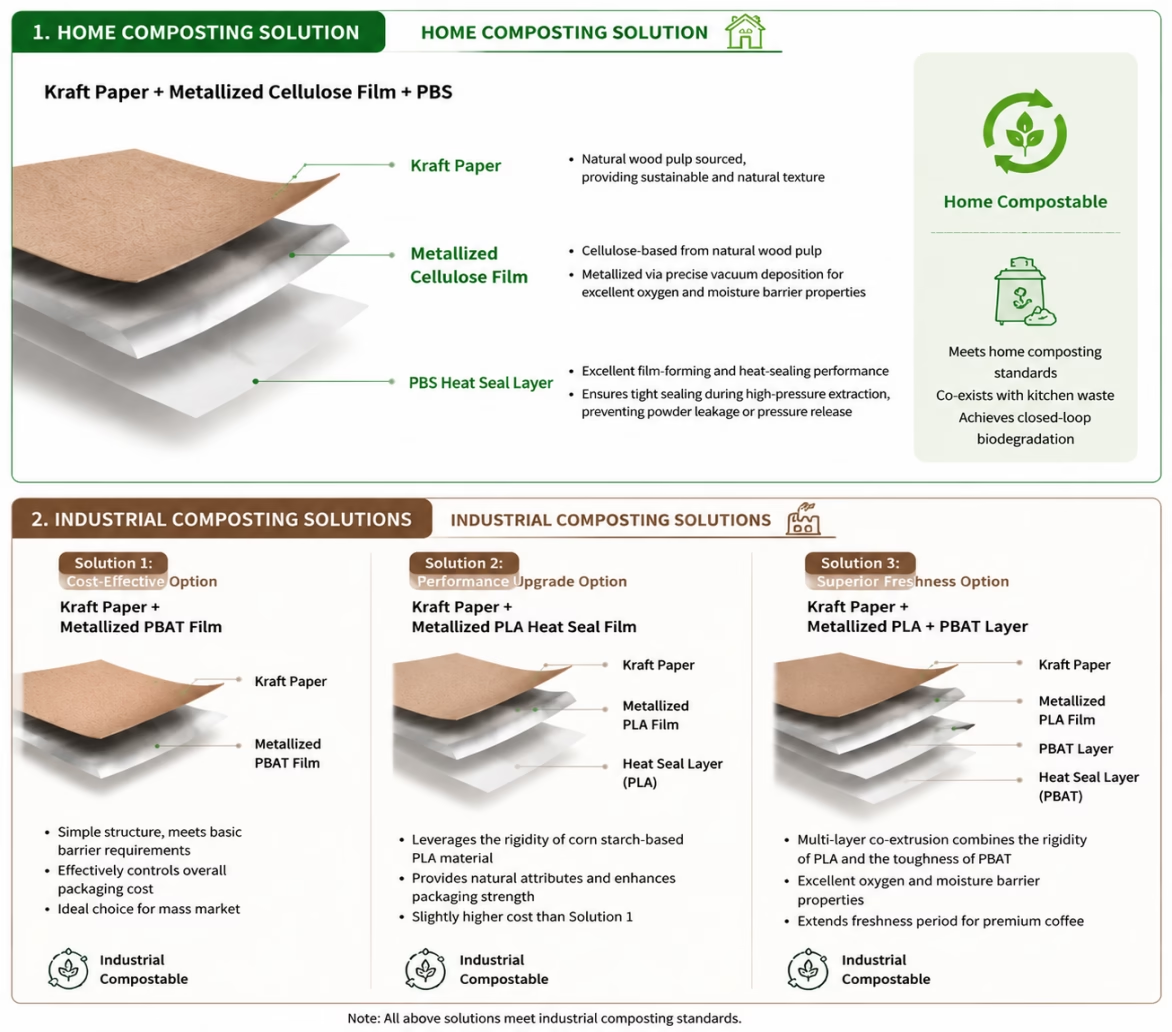
1. Home Composting Solution: The Ultimate Low-Carbon Choice
For brands pursuing the most advanced end-of-life sustainability experience, we recommend a multilayer structure of “kraft paper + metallized cellulose film + PBS”:
Metallized cellulose layer:
Derived from natural wood pulp, cellulose not only provides a naturally sustainable texture and appearance, but also achieves excellent oxygen and moisture barrier performance through precision vacuum metallization technology.
PBS heat-seal layer:
As the key sealing component, PBS offers strong film-forming and heat-sealing properties, ensuring a tight bond between the lid and capsule body during high-pressure extraction, effectively preventing leakage or pressure loss.
End-of-life advantage:
This solution complies with home composting standards. Discarded capsules can be disposed of together with organic waste, enabling a fully bio-based circular degradation process.
2. Industrial Composting Solutions: A Precise Balance Between Performance and Cost
● Cost-efficient option: Kraft paper + PBAT metallized film
This structure is relatively simple. While meeting basic barrier requirements, it effectively reduces overall packaging cost, making it a preferred choice for large-scale commercial applications.
● Performance-upgraded option: Kraft paper + PLA metallized heat-seal film
By leveraging the rigidity of corn-starch-based PLA materials, this structure enhances overall mechanical strength while maintaining a naturally derived material profile. Its cost is slightly higher than the PBAT-based option.
● Premium preservation solution: Kraft paper + PLA metallized layer + PBAT layer
Through a multilayer composite design, this structure combines the rigidity of PLA with the flexibility of PBAT. It not only delivers excellent compostability, but also significantly improves oxygen and moisture barrier performance, extending the freshness window for specialty coffee products.
From a technical perspective, this approach is built on precise material functionality matching:
PLA, derived from renewable corn starch, achieves strong physical barrier properties after metallization; while PBAT, a petroleum-based modified biodegradable polymer, is engineered at the molecular chain level to ensure complete degradation under industrial composting conditions.
This application-driven, tailored structural design aims to help brands strike the optimal balance between environmental compliance and commercial performance.
Material selection often determines the future of a brand. As a source manufacturer, Keyful is not merely providing films—we are building a systematic solution that integrates barrier performance, sealing strength, and biodegradability.
Environmental sustainability should not come at the expense of product performance; instead, it should serve as an elevation of brand value.
We look forward to working with you to transform this small coffee capsule lid film into a bridge connecting consumers with a greener future—so that every coffee moment becomes a meaningful act of environmental responsibility.
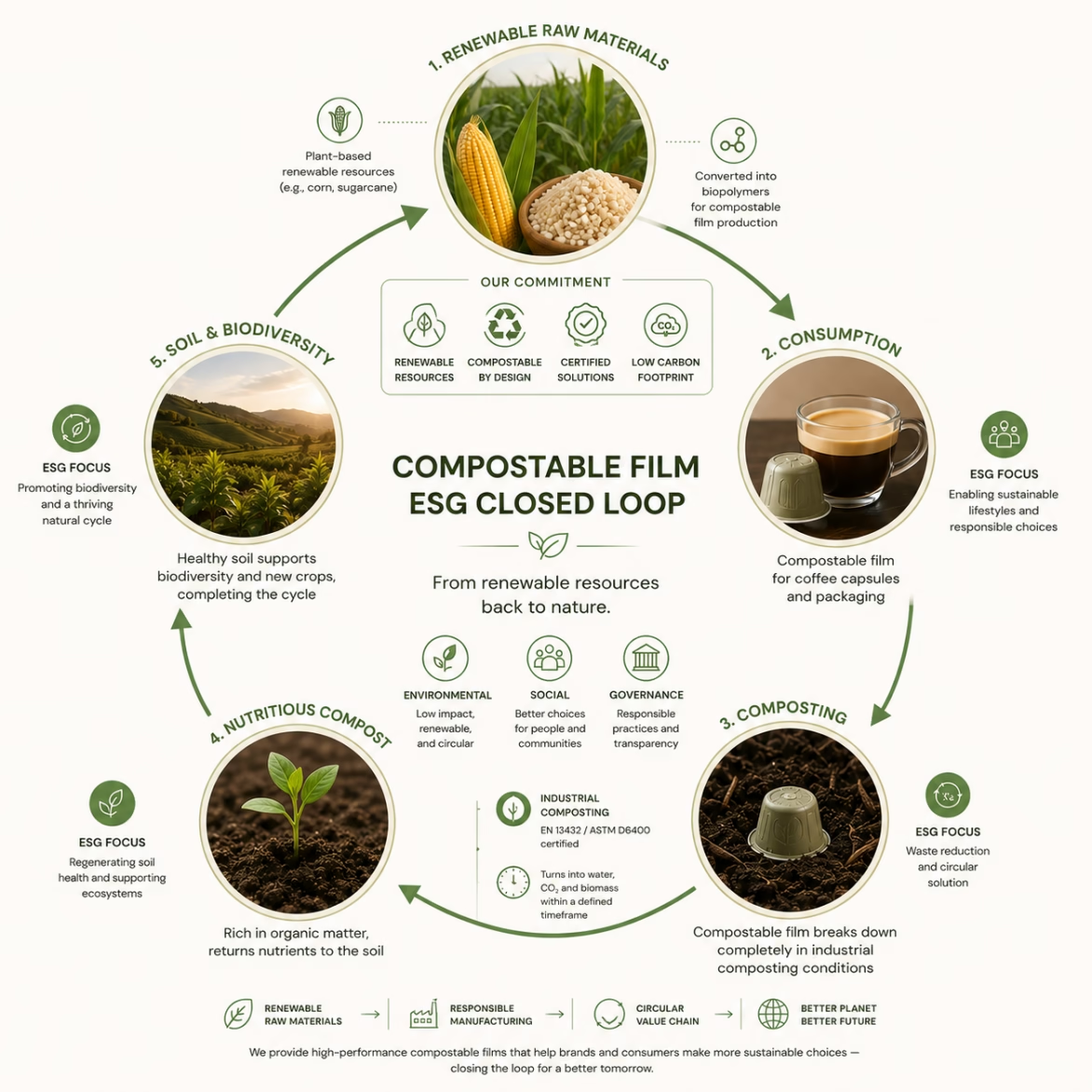
The transition toward fully sustainable packaging is no longer a futuristic ideal; it is an immediate operational mandate for global coffee brands. For procurement leaders, packaging engineers, and corporate sustainability officers, solving the “deep-water” challenge of lid film degradation represents the final, critical hurdle in achieving true product circularity. Keyful engineers advanced, source-manufactured material solutions that perfectly harmonize the rigorous pressure and barrier demands of espresso extraction with verifiable, certified compostability. By integrating Keyful’s bespoke multilayer biodegradable films—ranging from home-compostable metallized cellulose to high-barrier PLA/PBAT composites—B2B manufacturers can decisively eliminate the recycling bottleneck associated with legacy aluminum/PE composites. Partner with Keyful to future-proof your supply chain against tightening global ESG regulations, drastically reduce end-of-life environmental impact, and elevate your brand’s market positioning without ever compromising the pristine sensory experience of the perfect espresso.
FAQ
Why are traditional coffee capsule lid films considered an environmental bottleneck?
To withstand the high pressure and heat of espresso extraction, traditional lid films rely on complex multilayer composites like Aluminum/PE or PP/Aluminum. Because these mixed materials are nearly impossible to separate physically in standard recycling facilities, they typically end up in landfills or incinerators, breaking the capsule’s circular lifecycle.
What strategic shift are coffee brands making regarding end-of-life packaging?
Driven by tightening circular economy regulations, brands are pivoting from a traditional “recycling model”—which struggles to process composite lid films—to a “composting model.” This involves utilizing biodegradable materials that safely return to nature through domestic or industrial composting streams.
What is the optimal material structure for home-compostable capsule lids?
The ultimate low-carbon solution for home composting utilizes a multilayer structure combining kraft paper, a metallized cellulose film, and a PBS heat-seal layer. This allows consumers to dispose of the used capsule directly alongside household organic waste.
How does metallized cellulose contribute to coffee preservation?
Cellulose, derived from natural wood pulp, provides a sustainable base. When treated with precision vacuum metallization technology, it achieves the exceptional oxygen and moisture barrier performance required to lock in the coffee’s delicate aroma and flavor.
What is the function of PBS in these biodegradable structures?
PBS (Polybutylene succinate) serves as the critical heat-seal layer. It delivers strong film-forming and sealing properties, ensuring a secure, pressure-resistant bond between the lid and the capsule body, which prevents leaks during the high-pressure brewing process.
What industrial composting options exist for cost-conscious, large-scale brands?
For brands needing to balance performance with commercial scalability, a composite of kraft paper and PBAT metallized film is highly efficient. It effectively meets essential barrier requirements while significantly lowering overall manufacturing costs.
How do PLA and PBAT work together for premium specialty coffees?
In premium preservation structures, PLA (corn-starch-based) provides rigidity and strong physical barriers when metallized, while PBAT (a modified biodegradable polymer) adds necessary flexibility. Combined with kraft paper, this hybrid structure drastically improves oxygen and moisture defense, extending the freshness window for high-value specialty coffees under industrial composting conditions.