Production and Application of Cellulose Silicone Protective Film
This issue will introduce the manufacturing process and applications of cellulose silicone protective film.
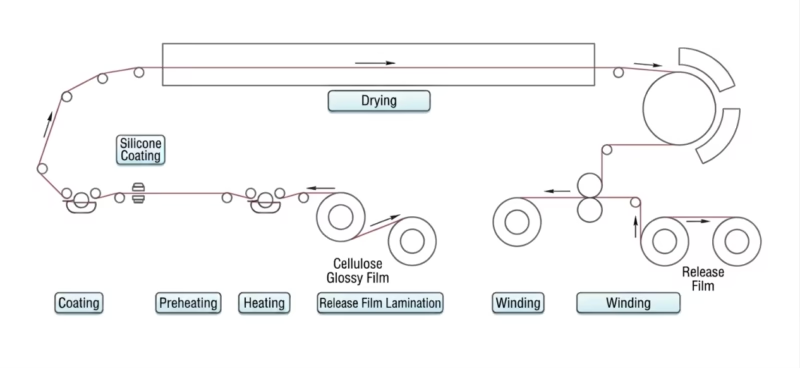
Cellulose silicone protective film is based on cellulose optical film, and its surface is made adhesive through a coating process.
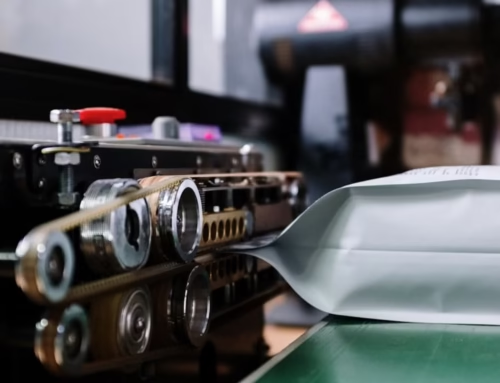
The following image will visually demonstrate the entire coating process.
Cellulose optical film → Unwinding → Coating with silicone → Drying → Laminating with release film → Rewinding.
When the power of nature meets exquisite craftsmanship — Keyful degradable cellulose silicone protective film redefines the green protection standard.
Against the backdrop of global plastic restriction and bans becoming a consensus, Shenzhen Keyful New Materials Co., Ltd. upholds the philosophy of “innovation, environmental protection, responsibility, and win-win,” driven by technological innovation, and is committed to solving the problem of traditional plastic pollution. It has grandly launched a biodegradable cellulose silicone protective film — an innovative product that combines natural environmental attributes with high-performance protection capabilities, achieving an organic integration of green development and commercial value.
This product was first developed by Keyful, successfully solving the industry problem that cellulose films are prone to shrinkage and wrinkling during high-temperature coating and drying processes. At the same time, its excellent performance enables stable adhesion to various plastic and metal surfaces, and it exhibits good anti-blocking properties under high-temperature conditions, avoiding adhesive residue issues, filling the technical gap of biodegradable protective films in high-temperature application fields. With this innovative achievement, Keyful has established a significant technological leading advantage in the field of biodegradable protective films.
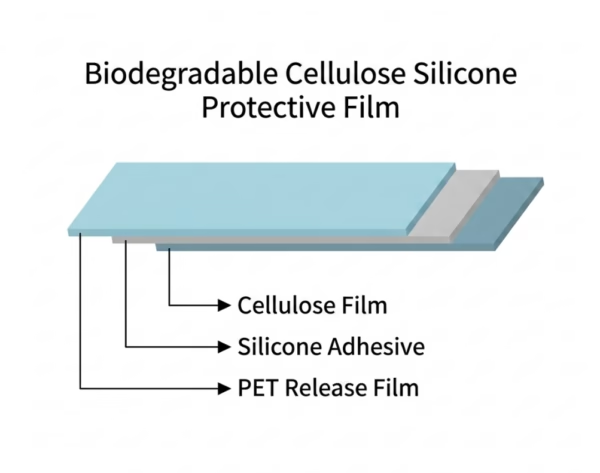
The diagram below shows the structure of a double-layer cellulose silicone protective film.
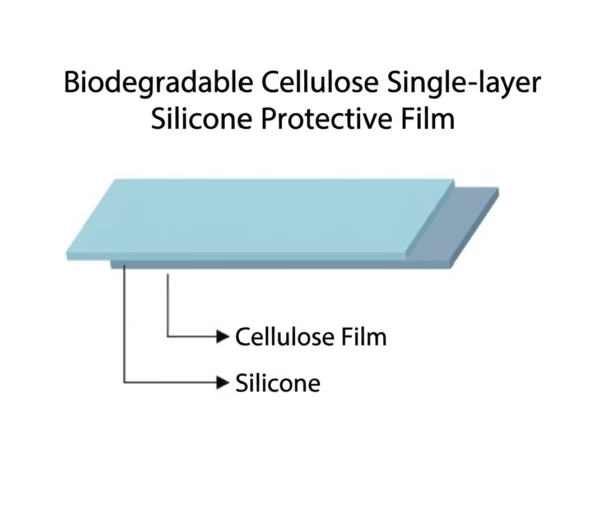
In addition to double-layer structure products,Keyful has, in response to some customers’ demand for full-machine wrapping protection of high-end plastic parts, taken the lead in developing a single-layer cellulose silicone protective film. This product does not require die-cutting and can achieve direct wrapping of products through equipment operation, greatly improving production efficiency and application flexibility.
In terms of technical implementation, we have successfully broken through the limitation of the traditional cellulose film structure requiring a “release liner + adhesive coating,” and innovatively achieved single-layer winding without a release liner, while meeting the stringent requirement of bubble-free manual wrapping. In contrast, conventional BOPP or PET protective films are relatively easier to realize in such processes. However, due to the inherent brittleness of cellulose films, limited tensile performance, and their tendency to become more brittle under high-temperature conditions, extremely high requirements are placed on the production environment and processing technology, representing a typical extreme process condition.
Through continuous technical breakthroughs and process optimization, Kaifeng has successfully overcome the above production bottlenecks, achieved stable mass production, and has already been successfully applied in coffee machine plastic components (such as the Nestlé project), verifying the practical feasibility and leading advantages of this product in the high-end protective film field.
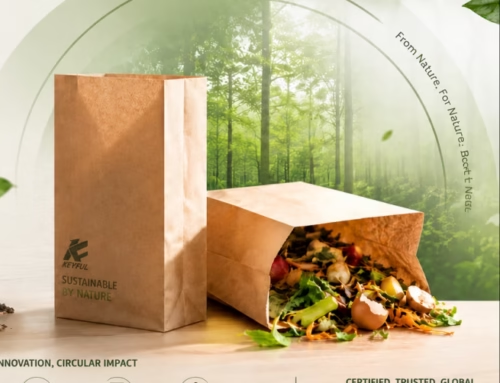
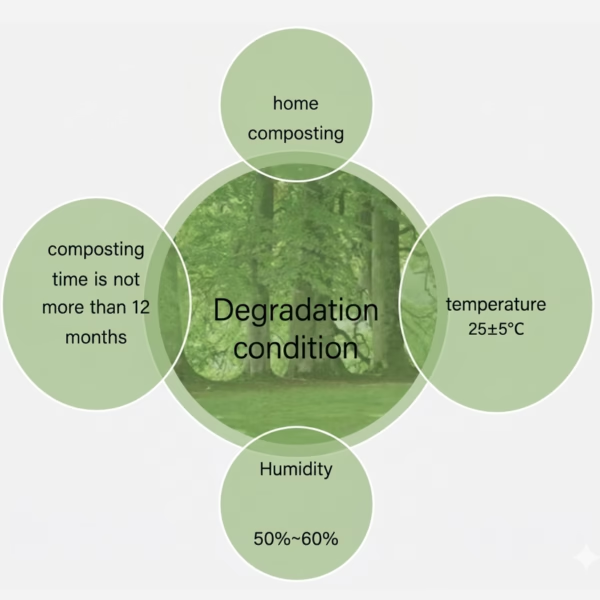
Cellulose Silicone Protective Film also possesses outstanding environmental performance, with its core advantage being the ability to achieve home-compostable degradation. In a natural soil environment, under the action of microorganisms and appropriate temperature and humidity conditions, the material can gradually decompose into carbon dioxide and water. These decomposition products further participate in the natural ecological cycle, providing basic elements for plant growth and being reabsorbed and utilized through photosynthesis.
The diagram below will help you intuitively understand its degradation process and key environmental conditions.
The application of Cellulose Silicone Protective Film is relatively specialized, mainly concentrated in the protective film industry. It is typically used in scenarios with high surface protection requirements for plastic and metal parts. In daily life, you may notice that the metal components on newly purchased home appliances or luxury handbags are often covered with a thin protective film. When it is gently peeled off, the product looks brand new — this is the core function of the protective film, providing effective protection for the product surface.
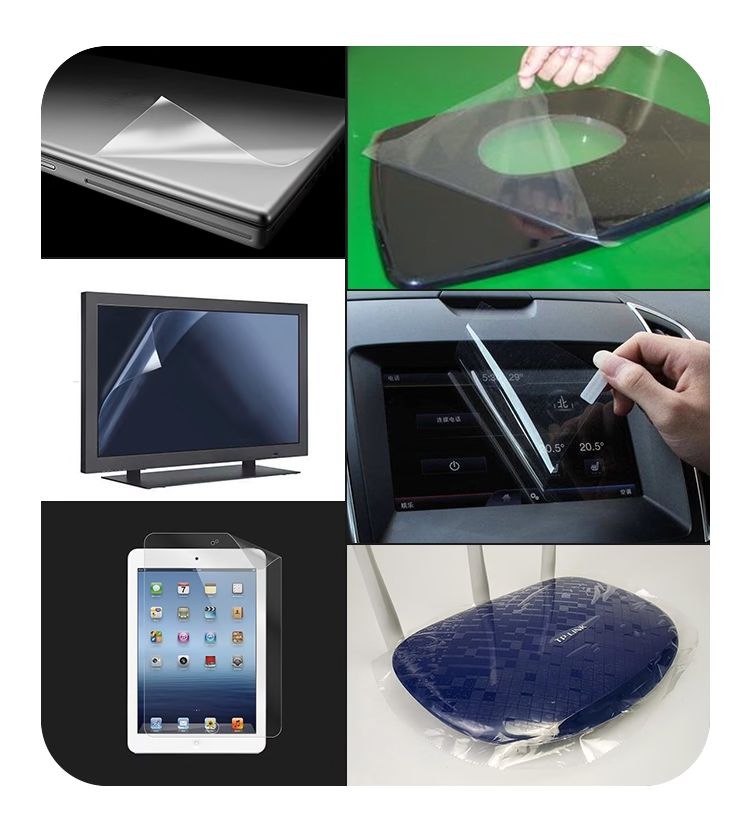
In the industrial field, traditional protective films are mostly based on PE or PET. However, with the advancement of global plastic restriction policies, Cellulose Silicone Protective Film is gradually becoming an ideal alternative. Its core advantages include:
Full replacement of PE/PET
Environmentally friendly and biodegradable, with no plastic pollution, enabling green and sustainable development.
Customizable adhesive coating
The silicone adhesive can be flexibly selected according to product protection requirements.
Single-layer or double-layer structures are available; if die-cutting is required, a four-layer structure design can be provided to meet diverse protection needs.
High processing performance
Supports high-speed die-cutting, printing, hot stamping, UV, and other processes.
Smooth edges without burrs, with processing performance comparable to traditional films, greatly improving production yield.
Extremely high stability
No adhesive transfer under cyclic testing at 85°C and 85% humidity.
Can be repeatedly removed; no residue or sticking even under high-temperature conditions or long-term adhesion.
Provides perfect protection for high-gloss surfaces, metal parts, electronic screens, and other precision surfaces.
Natural and environmentally friendly
Can naturally degrade in soil after use, reducing environmental burden.
Certified assurance
Certified by international biodegradation standards such as ASTM D6400 and EN 13432, ensuring both quality and environmental performance.
Summary: Cellulose Silicone Protective Film not only effectively protects product surfaces, but also takes into account environmental protection and sustainable development, making it an ideal choice for green packaging.
Keyful, as a high-tech enterprise focusing on cellulose biodegradable materials, has always taken independent research and development as its core driving force. The company has a mature R&D and production system and can provide customers with customized services for biodegradable protective films, creating a one-stop solution from material selection to end-use applications, fully meeting diverse needs.
As global brands such as Dell and Nestlé continue to increase investment in environmentally friendly materials, green transformation has evolved from a “cost input” into a “core competitiveness.” With biodegradable Cellulose Silicone Protective Film as its carrier, Kaifeng New Materials not only provides enterprises with compliant, high-performance eco-friendly alternatives, but also helps brands build traceable carbon footprint systems, enabling them to seize opportunities in the global biodegradable materials market valued at hundreds of billions of dollars.
Choosing Keyful is not just choosing a protective film, but choosing a sustainable development path for the future. Let us protect the beauty of precision manufacturing with the power of nature, use technological innovation to solve white pollution, and move together toward a plastic-free future — environmental protection is never an optional question, but a required one that Keyful writes together with you.